

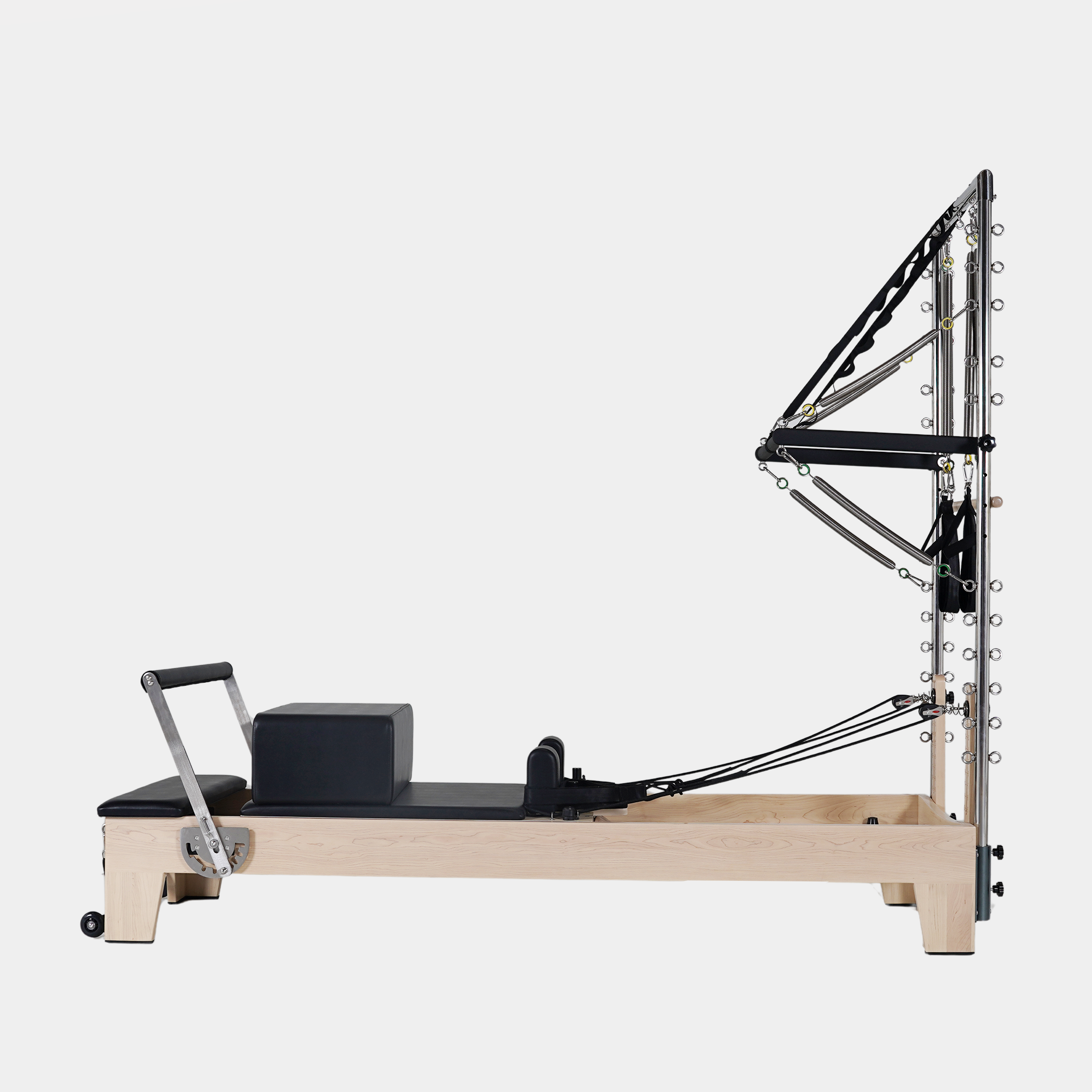
If you're building a serious home Pilates space, you’ve probably come across the term reformer with tower for home and wondered whether the upgrade is actually worth it. It’s a common question — especially for buyers who want professional-level training but also need to be practical about space, budget, and ease of use. The short answer? For the right user, a reformer with tower can replace multiple pieces of equipment and significantly expand what you can train at home.
Let’s break this down the same way top Pilates professionals and buyers evaluate the decision.
What Makes a Reformer with Tower Different?
A standard Pilates reformer focuses on horizontal carriage movement using springs, ropes, and a footbar. A reformer with tower adds a vertical frame with additional spring attachment points, bars, and pulleys.
This changes your training in three major ways:
| Standard Reformer | Reformer with Tower |
|---|---|
| Carriage-based movement | Carriage + vertical resistance |
| Core & lower body focus | Full-body strength integration |
| Limited upper-body push/pull | Expanded push, pull, and suspension work |
| Excellent for flow workouts | Excellent for precision & progression |
The tower component allows exercises that improve postural strength, shoulder stability, spinal mobility, and controlled resistance work — things typically seen in professional studio sessions.
Is It Practical for Home Use?
This is where most buyers hesitate.
A reformer with tower is absolutely suitable for home use — but it's best for people who treat Pilates as a long-term training practice, not just occasional stretching.
It’s worth it for home when:
✔ You want studio-level exercise variety without buying multiple machines
✔ You train 3–5 times per week and want room to progress
✔ You care about strength development, not just mobility
✔ You prefer one integrated system instead of upgrading later
Because the tower expands resistance angles and movement planes, you won’t outgrow the machine as quickly as a basic setup.
Training Benefits You Don’t Get from a Basic Reformer
A tower-equipped reformer allows:
* Vertical spring resistance for upper-body strength
* Deeper assisted stretches
* More precise core stabilization work
* Progressive overload through varied spring placements
* Expanded rehabilitation-style movements
This is why many experienced users say it feels closer to a professional Pilates apparatus system than a simple home reformer.
When It Might Not Be Worth It
A reformer with tower isn’t necessary for everyone.
It may be more than you need if:
* You are brand new to Pilates
* You mainly want light stretching and mobility work
* You have strict ceiling height or storage limitations
* You prefer very simple equipment with minimal setup
In those cases, a foundational reformer may meet your needs for now.
Cost vs Value: The Real Calculation
The question isn’t just price — it’s replacement value.
A reformer with tower can reduce the need for:
* Separate tower units
* Additional resistance training tools
* Frequent studio sessions
For dedicated users, this often makes it a long-term investment rather than an upgrade luxury.
Who Gets the Most Value?
A reformer with tower for home is most worthwhile for:
* Intermediate to advanced Pilates practitioners
* Home users replicating studio-style training
* Fitness-focused users wanting strength + mobility
* Instructors or trainers working with clients at home
These users benefit from the machine’s versatility, progression capacity, and training depth.
Final Verdict
So — is a reformer with tower worth it for home use?
Yes, if you want your home setup to grow with your ability.
It offers more movement dimensions, more strength potential, and more exercise variety than a basic reformer alone. For serious practitioners, it’s one of the most complete single-machine Pilates solutions available.
If your goal is to build a long-term, progressive home Pilates practice rather than a short-term fitness phase, a reformer with tower is often the smarter choice.
FAQs
Is a reformer with tower good for home use?
Yes, a reformer with tower can be an excellent choice for home use, especially for people who want a studio-style workout experience. The tower adds vertical spring resistance, allowing for more upper-body strength work, deeper stretching, and advanced core exercises that a standard reformer alone cannot provide.
What is the main benefit of a reformer with tower?
The biggest advantage is exercise variety and progression. A reformer with tower supports both horizontal and vertical resistance training, which improves full-body strength, posture, flexibility, and control. It allows you to move from beginner-level movements to advanced strength and mobility work without needing additional equipment.
Is a reformer with tower worth it for beginners?
Beginners can use it, but they may not use the tower features right away. It becomes especially valuable as your skills improve. If you plan to train long-term and want room to progress, investing in a reformer with tower can prevent the need to upgrade equipment later.
Does a reformer with tower replace other Pilates equipment?
In many home settings, yes. A reformer with tower can combine the benefits of a standard reformer and certain tower or wall-unit exercises, reducing the need for multiple large machines. It provides a more complete training system in a single setup.
What type of person benefits most from a reformer with tower?
It’s ideal for home users who want professional-level training, people focused on strength and posture improvement, and those who prefer a wider range of exercises beyond basic reformer movements. It’s also useful for experienced practitioners who want to keep progressing.
Share:
Who Should Choose a Pilates Reformer with Tower
Reformer vs Reformer with Tower