

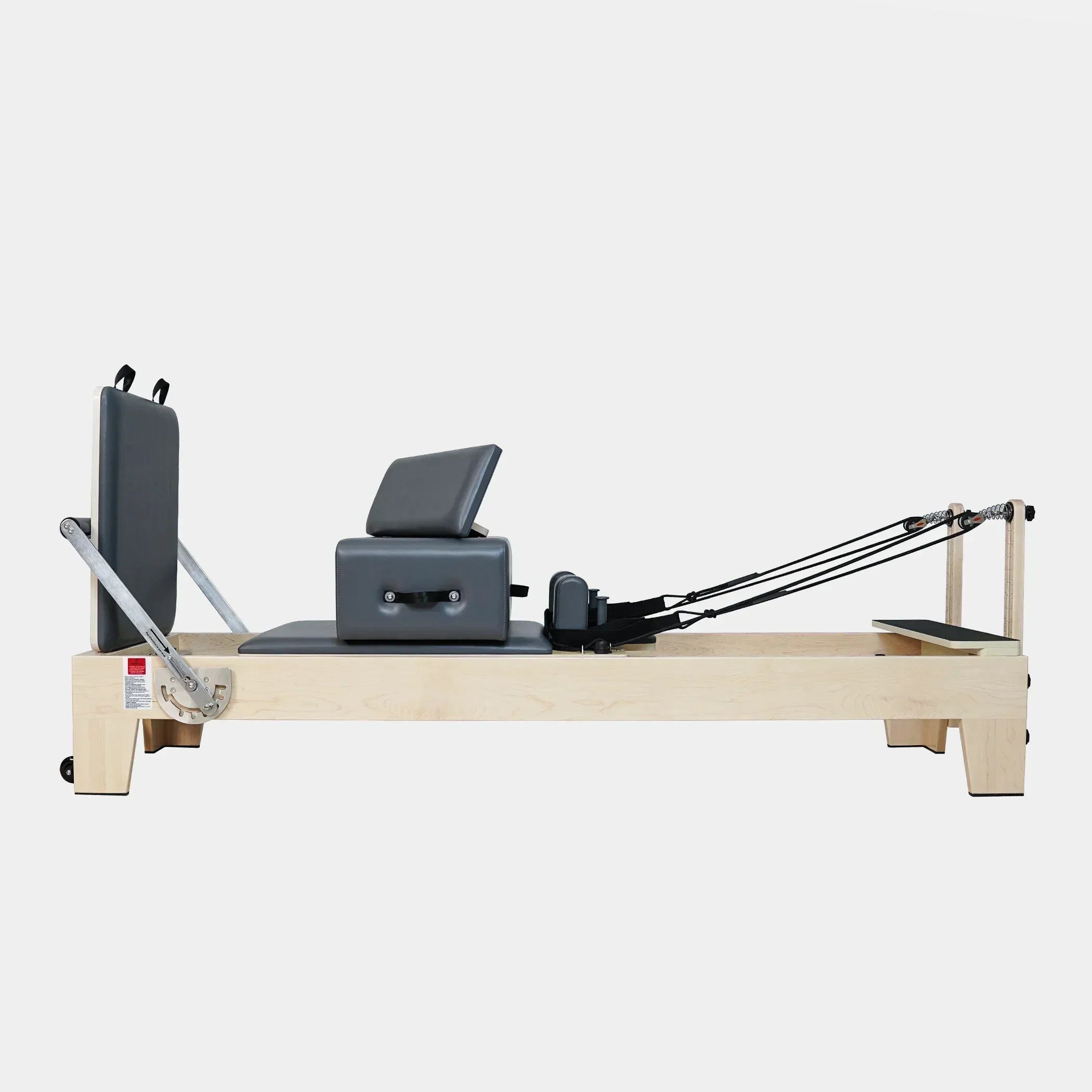
Yes, reformer Pilates can support weight loss by increasing physical activity, building strength and helping you follow a consistent exercise routine. However, a reformer does not automatically cause weight loss, and Pilates cannot selectively remove fat from the waist or any other body area.
Body weight changes are influenced by energy intake, physical activity, sleep, stress, health conditions and other individual factors. The most useful way to view reformer Pilates is as one part of a sustainable weight-management plan.
How reformer Pilates may support weight management
It provides full-body resistance exercise
The carriage, springs, straps and body positions allow you to train the legs, glutes, core, back, shoulders and arms. Regular resistance exercise can improve muscular strength and help preserve or build lean tissue while you work toward a healthier body composition.
It can make regular exercise easier to maintain
Consistency matters more than one unusually hard workout. A home reformer removes travel and class-scheduling barriers, which may make it easier to complete regular sessions. The benefit comes from actual use, not simply owning the machine.
Sessions can be adjusted to your fitness level
Spring resistance, exercise selection, range of motion and session length can be modified. Beginners can focus on control and technique, while experienced users can use more demanding sequences, jumpboard intervals or shorter rests where appropriate.
Pilates can complement aerobic activity
Reformer training is primarily a controlled resistance and movement practice. Depending on the session, it may not provide the same continuous aerobic demand as brisk walking, cycling, running or swimming. Combining reformer sessions with appropriate aerobic activity creates a more complete weekly programme.
What Pilates cannot promise
No exercise machine can guarantee a particular number of pounds lost. Calorie use varies according to body size, exercise selection, resistance, pace, session length and training experience.
Pilates also cannot target fat loss in one area. Core exercises can strengthen abdominal muscles and improve posture, but visible fat loss depends on overall changes in body composition.
Public-health guidance emphasises that weight management normally combines regular physical activity with healthy eating patterns. The CDC notes that physical activity helps create an energy deficit, while most weight loss usually comes from reducing calorie intake. Adults are generally advised to obtain at least 150 minutes of moderate-intensity aerobic activity per week and muscle-strengthening activity on at least two days.
Sources: CDC physical activity and weight guidance and CDC healthy weight-loss guidance.
A realistic weekly plan
The right plan depends on your health, experience and recovery. A general example for a healthy adult might include:
- Two or three reformer strength sessions
- Moderate aerobic activity distributed through the week
- At least one easier recovery or mobility day
- Gradual progression rather than sudden increases in intensity
Beginners should first learn carriage control, neutral alignment, spring changes and safe transitions. If you are pregnant, recovering from injury, managing a medical condition or returning after a long break, ask a qualified health professional or Pilates instructor for individual guidance.
How to make reformer sessions more useful for your goal
Use progressive resistance
Progress does not always mean adding the heaviest spring. You can increase difficulty through better control, longer range, additional repetitions, more complex coordination or carefully adjusted resistance.
Train large muscle groups
Include balanced work for the legs, hips, pulling muscles, pushing muscles and trunk rather than performing only abdominal exercises.
Track behaviours, not just scale weight
Useful measures include sessions completed, resistance progress, walking or aerobic minutes, sleep, waist measurement and how clothing fits. Daily body weight can fluctuate for reasons unrelated to fat loss.
Avoid turning every session into HIIT
Fast intervals are not automatically better. Reformer exercises require control, and fatigue can reduce technique. Use higher-intensity sequences only when appropriate for your experience and equipment, and balance them with strength, mobility and recovery work.
Choosing a reformer for consistent home training
For weight-management goals, prioritise a machine you will use regularly. Compare:
- Frame stability
- Smooth and predictable carriage movement
- A useful range of spring resistance
- Adjustability for your height
- Appropriate user-weight capacity
- Accessories you genuinely plan to use
- The space required for regular setup
If your reformer must be stored after every session, a model from the Foldable Reformers collection may improve consistency. If you have a permanent training room, compare the full Pilates Reformers collection.
Frequently asked questions
How often should I use a Pilates reformer for weight loss?
There is no universal number. Two or three well-planned reformer sessions can form the strength component of a weekly activity plan, combined with aerobic activity and appropriate recovery.
Does reformer Pilates burn belly fat?
It can strengthen the abdominal muscles, but it cannot selectively burn fat from the belly. Overall fat loss depends on sustained changes in energy balance and individual factors.
Is 20 minutes on a reformer enough?
A consistent 20-minute session can contribute to your weekly activity and may be more useful than an ambitious plan you rarely complete. Your total weekly activity and progression matter more than one session length.
Is a reformer better than walking for weight loss?
They serve different purposes. Reformer Pilates provides resistance, control and mobility work; brisk walking provides accessible aerobic activity. Many people benefit from combining both.
Bottom line
A Pilates reformer can support weight loss, strength and body-composition goals, but it is not a shortcut and results are not guaranteed. Use it as part of a consistent programme that includes aerobic activity, healthy eating, recovery and realistic progression.
Share:
Pilates Reformer Setup Guide for Home Use
How to Choose a Pilates Reformer for Small Spaces