

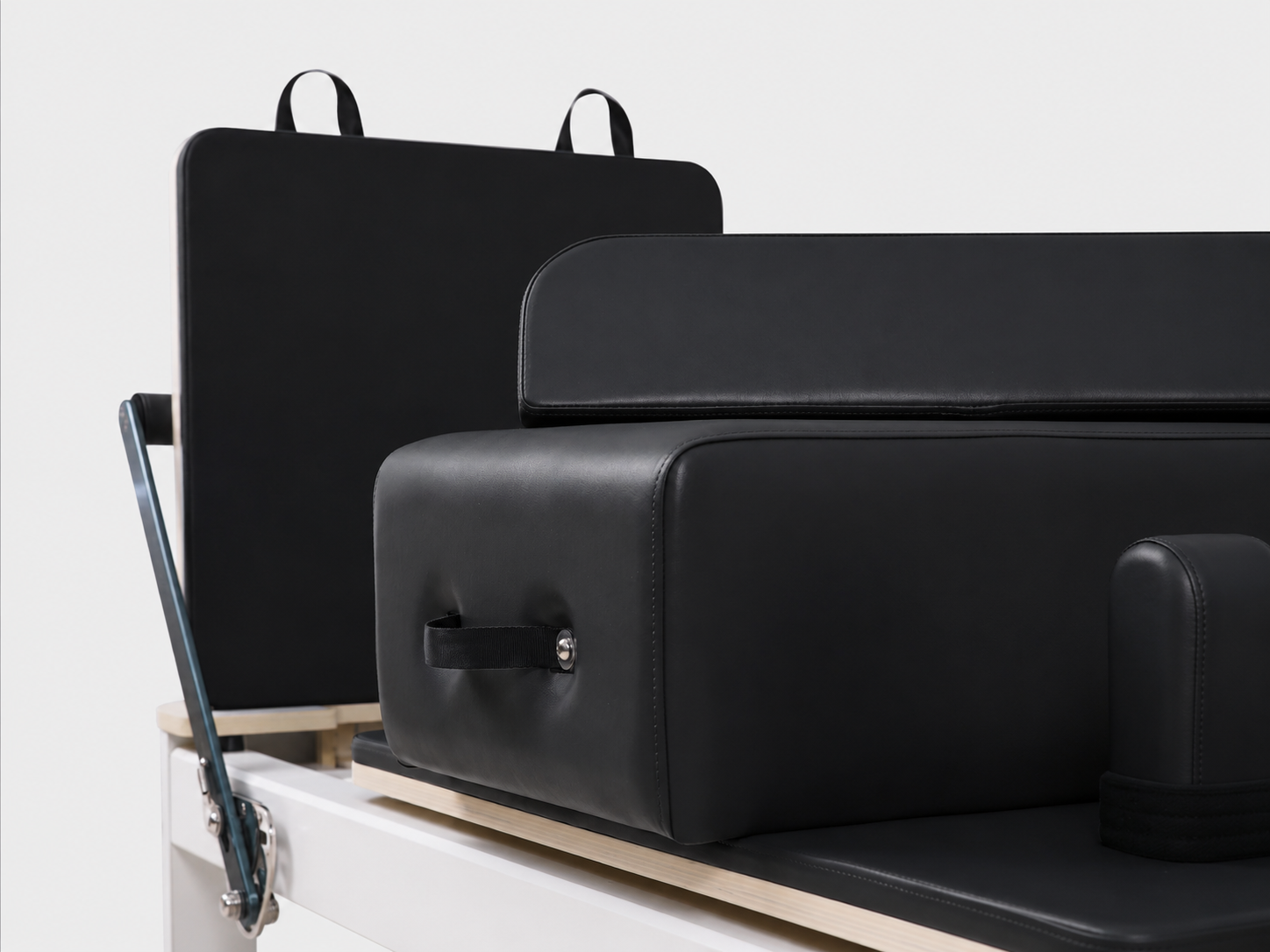
When choosing a Pilates reformer, most buyers focus first on the frame, springs, pulley system, carriage movement, and overall stability. These are all important. But there is another detail that directly affects comfort, grip, cleaning, durability, and long-term user experience: the surface material used on the reformer’s main contact parts.
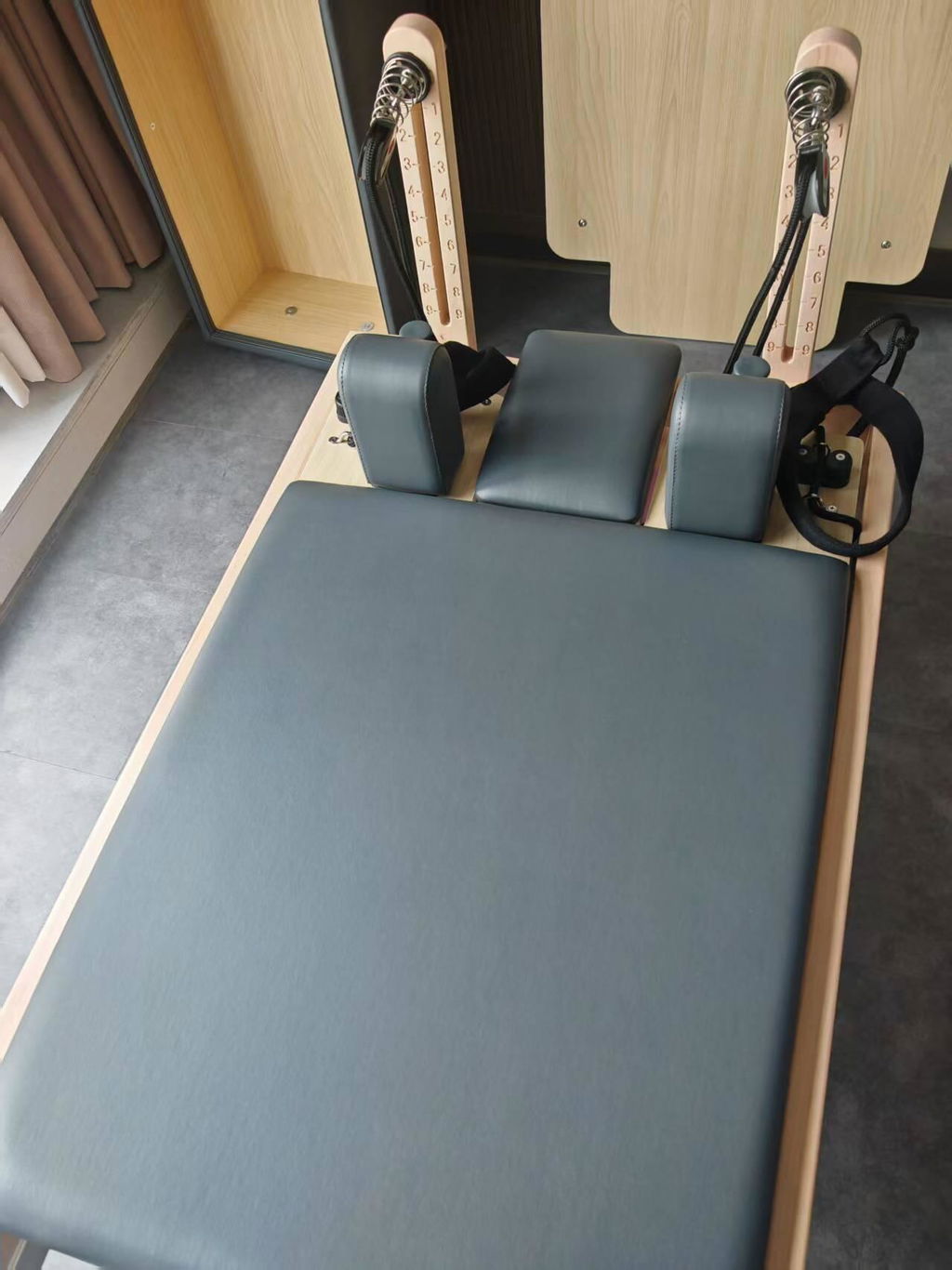
On a high-quality Pilates reformer, microfiber leather is not only used on the carriage pad. It may also be used on the shoulder pads, jump board, foot pedal or footbar padding, seat box, and other padded accessories. These are the areas that touch the body most often, absorb the most friction, and need to stay comfortable and easy to clean after repeated workouts.
In this guide, we’ll explain what microfiber leather is, where it is commonly used on a Pilates reformer, how it compares with PU and PVC materials, and why it can be a smart choice for both home users and Pilates studios.
What Is Microfiber Leather?
Microfiber leather, also known as microfiber synthetic leather, is a high-performance synthetic material made from ultra-fine fibers and polyurethane resin. Its internal structure is designed to create a soft, flexible, and durable surface that can feel more premium than ordinary PU or PVC leather.
Unlike basic synthetic leather, which often relies on a flat surface coating over a fabric backing, microfiber leather uses a denser fiber network. This structure can help improve tear resistance, abrasion resistance, flexibility, and surface stability under repeated use.
For Pilates reformers, this matters because the material is not simply decorative. It is part of the real training experience. A reformer surface needs to support the body, resist sweat, handle cleaning, provide stable grip, and maintain its appearance over time.
Where Is Microfiber Leather Used on a Pilates Reformer?
Microfiber leather can be used across several high-contact parts of a Pilates reformer. Each part has different performance requirements, which is why material choice can make a noticeable difference.
1. Carriage
The carriage is the area users interact with most frequently. During Pilates practice, users may lie down, sit, kneel, or place their hands, elbows, knees, hips, and back on the carriage. Movements such as The Hundred, Short Spine, Long Stretch, Mermaid, and kneeling arm work all create repeated friction between the body and the carriage surface.
A good microfiber leather carriage surface can provide a balance of softness, support, grip, and easy cleaning. It should feel comfortable during longer sessions while still being durable enough to handle daily movement and repeated wiping.
2. Shoulder Pads
Shoulder pads help stabilize the upper body during many reformer exercises. They often receive concentrated pressure from the shoulders, neck area, and upper back, especially during supine movements and spring-resistance exercises.
Microfiber leather on shoulder pads can help create a softer and more supportive contact point. It also needs to resist cracking, peeling, and surface wear caused by repeated body pressure and sweat exposure.
3. Jump Board
The jump board is one of the most demanding contact areas on a reformer. During jump board workouts, the feet repeatedly push off the surface with force. This creates friction, impact, sweat exposure, and repeated pressure in the same area.
For this reason, the jump board surface needs to offer stable grip and strong wear resistance. A microfiber-covered jump board can help reduce slipping while maintaining a cleaner and more premium appearance over time.
4. Foot Pedal or Footbar Padding
Depending on the reformer design, the foot pedal or padded footbar area may be used for foot placement, hand support, or assisted body positioning. These areas require a surface that feels secure during movement.
Microfiber leather can provide a more stable touch point than lower-grade synthetic materials, especially when users are training barefoot or after sweating. For home users and studio clients, this can make the reformer feel more controlled and comfortable.
5. Seat Box
The seat box is used in many reformer exercises and variations. Users may sit, kneel, lie face down, place the feet on it, or use it for support during assisted movements.
Because the seat box is used in so many positions, its surface needs to be durable, skin-friendly, and easy to wipe clean. Microfiber leather can be a good choice because it combines comfort with practical maintenance benefits.
Microfiber Leather vs PU vs PVC: Key Differences for Reformer Contact Surfaces
PU, PVC, and microfiber leather are all used in fitness equipment, but they perform differently when applied to Pilates reformer surfaces. The following comparison focuses on parts such as the carriage, shoulder pads, jump board, foot pedal padding, and seat box.
| Performance Factor | PVC Leather | Ordinary PU Leather | Microfiber Leather |
|---|---|---|---|
| Abrasion Resistance | Usually lower. It may become stiff or show wear more quickly under frequent use. | Moderate. Softer than PVC, but performance depends heavily on material grade and coating quality. | Generally stronger. High-quality microfiber leather is often selected for better long-term wear resistance. |
| Tear Resistance | Lower tear resistance. Once damaged, the surface may continue to split. | Moderate tear resistance. May deform or peel under repeated stress if the coating is low quality. | Better tear resistance due to its dense fiber structure and flexible surface. |
| Grip and Surface Feel | Can feel slippery, especially when exposed to sweat. | Often feels soft at first, but may become sticky or worn depending on use and cleaning habits. | Offers a more stable, premium touch with better comfort and grip for repeated body contact. |
| Cleaning and Maintenance | May harden, fade, or lose surface quality if cleaned too aggressively. | Can be affected by sweat, moisture, heat, and harsh cleaning products over time. | Usually easier to maintain when cleaned properly with mild, non-abrasive products. |
| Odor and Home Use Comfort | Lower-grade PVC may have a stronger plastic smell. | Odor level varies depending on the product grade and manufacturing process. | High-quality microfiber leather is often chosen for a lower-odor and more comfortable user experience. |
| Best Use Case | Basic or budget equipment with lighter use. | Entry-level to mid-range equipment, depending on material quality. | Home users who want better comfort and studios that need better durability and easier cleaning. |
Why Microfiber Leather Works Well for Home Pilates Reformers
For home users, comfort and daily usability are often just as important as technical performance. A home Pilates reformer may be placed in a bedroom, living room, home gym, or small studio space. In these environments, the surface material should feel pleasant to touch, have minimal odor, and be easy to maintain.
Comfort for Direct Skin Contact
Many Pilates movements involve direct contact between the skin and the reformer surface. Users may train in shorts, leggings, tank tops, or sports bras, which means the carriage, shoulder pads, and seat box should feel smooth and comfortable against the body.
Microfiber leather can offer a softer and more skin-friendly touch than lower-grade PVC or ordinary synthetic leather. This can improve the overall experience during longer sessions and floor-to-reformer transitions.
Better Fit for Home Spaces
Low-quality synthetic surfaces may release stronger odors after unboxing, especially in enclosed rooms. While odor can vary by supplier and production process, high-quality microfiber leather is often preferred for home reformers because it can provide a cleaner, more premium feel in indoor spaces.
Easy Daily Cleaning
After a home workout, users usually want a reformer that can be wiped down quickly. Microfiber leather surfaces on the carriage, jump board, shoulder pads, and seat box are generally easy to clean with a soft cloth and mild cleaning solution when maintained properly.
Why Microfiber Leather Matters for Pilates Studios
For Pilates studios, the reformer is not just a piece of equipment. It is part of the client experience and the studio’s visual presentation. When several clients use the same reformer each day, the contact surfaces must handle sweat, repeated cleaning, body friction, and high-frequency movement.
Durability Under Frequent Use
In a studio environment, the carriage, shoulder pads, jump board, foot pedal, and seat box are used repeatedly throughout the day. Lower-grade materials may begin to look shiny, worn, cracked, or stretched after frequent use.
Microfiber leather can help maintain a cleaner and more professional appearance over time, especially when the reformer is used for both private sessions and group classes.
Stable Grip for Better Training Confidence
Many reformer exercises require control, balance, and confidence. For movements involving standing, kneeling, jumping, or pushing through the feet, the surface should not feel overly slippery.
Microfiber leather can provide a more stable contact feel on areas like the carriage, jump board, and foot pedal. This helps users focus on movement quality instead of worrying about slipping or discomfort.
Lower Maintenance Pressure
Studios need to clean equipment after each class. If the surface material is sensitive to moisture or harsh cleaning products, it may age faster. A durable microfiber leather surface can reduce visible wear and help studios keep their equipment looking newer for longer.
How to Clean and Maintain Microfiber Leather Reformer Parts
Even durable materials need proper care. Good maintenance habits can help protect the carriage, shoulder pads, jump board, foot pedal padding, and seat box.
Daily Cleaning
After each workout or class, wipe the microfiber leather surfaces with a soft, slightly damp cloth. For regular cleaning, use warm water or a mild, neutral cleaning solution. After wiping, dry the surface with a clean cloth to prevent moisture from sitting on the material.
What to Avoid
Avoid bleach, strong acidic or alkaline cleaners, abrasive brushes, oil-based cleaners, and high-concentration alcohol. These products may damage the surface coating, reduce softness, or cause premature aging.
Monthly Deep Cleaning
For sweat buildup, body lotion marks, or stubborn surface stains, use a cleaner designed for synthetic leather or microfiber leather. Apply gently with a soft cloth or soft-bristled brush, then remove residue with a clean damp cloth and dry the surface completely.
Sunlight and Storage
Avoid placing the reformer or seat box in direct sunlight for long periods. UV exposure can accelerate the aging of many synthetic materials. If your reformer is near a window, consider using curtains or moving accessories such as the seat box away from strong sunlight when not in use.
Buyer Checklist: What to Ask Before Choosing a Pilates Reformer
If you are comparing Pilates reformers, do not only ask whether the carriage is padded. Ask where the microfiber leather is used and how the material performs in real training conditions.
- Is microfiber leather used only on the carriage, or also on the shoulder pads, jump board, foot pedal, and seat box?
- What material is used on the jump board surface?
- Is the seat box covered with the same material as the reformer carriage?
- Is the surface easy to clean after sweaty workouts?
- Does the material have a strong odor after unboxing?
- Is the material suitable for frequent studio use?
- Can the leather color be customized?
- Are replacement pads or accessories available if needed?
These questions are especially useful for buyers who plan to use the reformer every day, share it with family members, or place it in a professional Pilates studio.
Final Thoughts
Microfiber leather is not just a cosmetic upgrade on a Pilates reformer. When used across key contact parts such as the carriage, shoulder pads, jump board, foot pedal, and seat box, it can improve comfort, grip, cleaning convenience, and long-term appearance.
For home users, this means a more comfortable and easier-to-maintain reformer for daily practice. For studio owners, it means better durability, a cleaner client experience, and equipment that continues to look professional under frequent use.
If you are choosing a reformer for home training or studio use, pay attention to more than the frame and springs. The surface materials you touch every session can make a real difference in how the reformer feels, performs, and lasts.
Explore our Pilates reformers for home and studio use, or contact our product team to learn more about customization options, leather colors, accessories, and reformer configurations.
Share:
Mid-Year Reformer Sale: Save Up to $1000 on Selected Pilates Reformers
Gym Reformer Classes vs. Owning a Home Pilates Reformer: Which Is Right for You?