

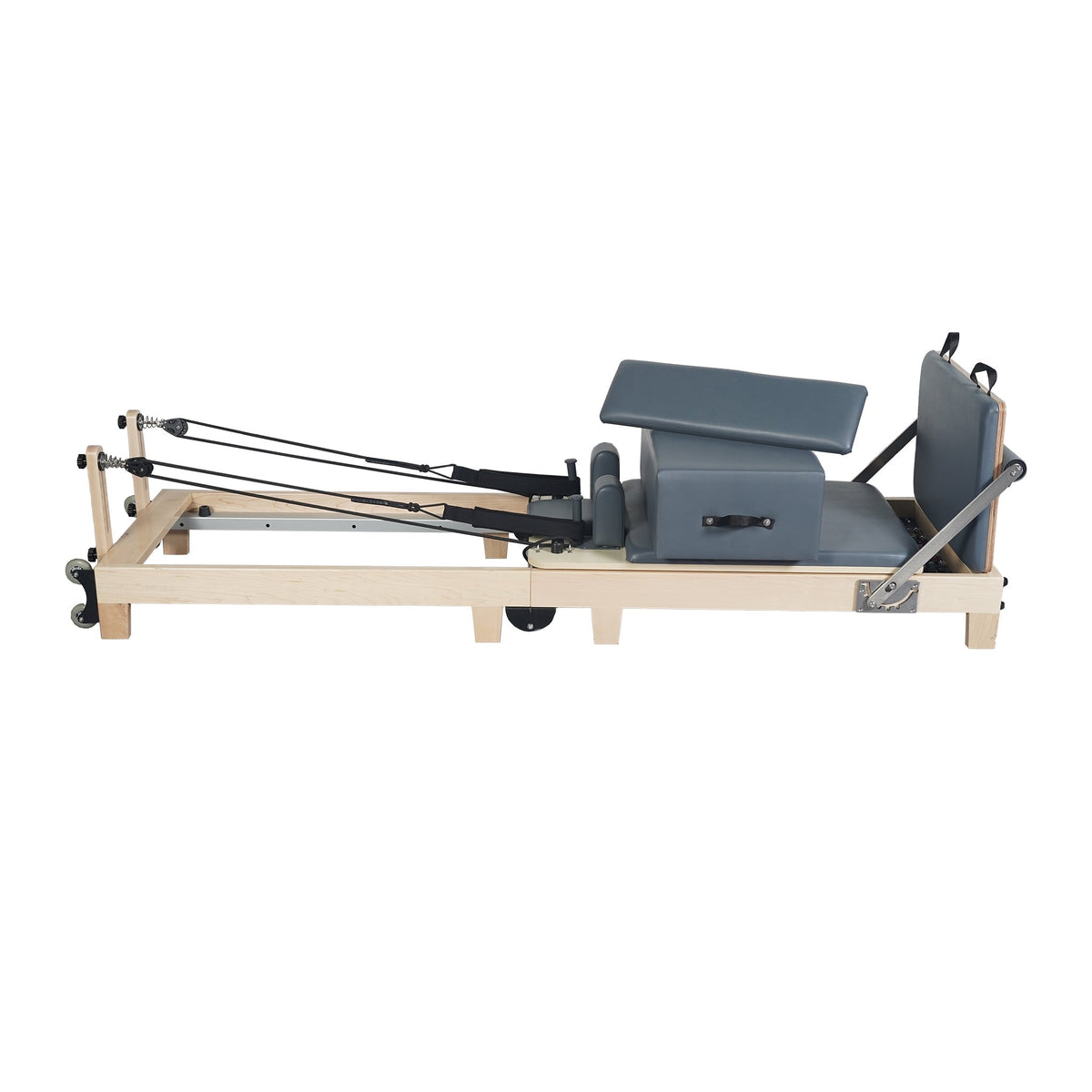
If you are wondering how much a Pilates reformer costs in 2026, the quick answer is this: many home Pilates reformers fall somewhere between about $1,200 and $3,000, depending on the frame material, carriage system, spring quality, accessories, and whether the machine includes a tower or Cadillac-style function.
For many home users, the most practical value range is around $1,500 to $2,000. This is where you can usually find a more stable frame, smoother carriage movement, better resistance control, and enough features for regular home practice without paying for a full commercial studio machine.
This guide breaks down the real Pilates reformer price range in 2026, what makes one model more expensive than another, and how to choose the right reformer based on your budget, space, and training goals.
Pilates Reformer Price Range by Type
Not every Pilates reformer is priced the same because not every reformer is designed for the same user. A compact foldable reformer for an apartment, a full-track maple reformer for a home gym, and a tower-style system are very different purchases.
Here is a simple way to understand the price range:
| Reformer Type | Typical Price Range | Best For |
|---|---|---|
| Entry-level home reformer | $1,000–$1,500 | Beginners, light home workouts, smaller budgets |
| Foldable home reformer | $1,200–$1,800 | Apartments, shared rooms, small home gyms |
| Aluminum reformer | $1,400–$2,000 | Users who want a modern, durable, lower-maintenance frame |
| Wood Pilates reformer | $1,500–$2,500 | Home users who want a warmer studio-style look |
| Reformer with tower | $1,800–$3,000 | Users who want more full-body training options |
| Cadillac-style or multi-function system | $2,500–$4,000+ | Advanced users, instructors, serious home studios |
| Premium studio reformer | $4,000–$10,000+ | Commercial studios or buyers who want brand-name equipment |
If you are buying a Pilates reformer for home use, you do not always need the most expensive option. The better question is: what kind of training do you actually plan to do, and how much space do you have?
Best Pilates Reformers Under $2,000 in 2026
Many buyers search for the best Pilates reformer under $2,000 because this is one of the most practical budget ranges for home use. It is high enough to avoid many unstable low-cost machines, but still much more affordable than most commercial studio reformers.
Here is what you can usually expect under $2,000:
| Budget | What You Can Expect | Best For |
|---|---|---|
| Under $1,500 | Basic to mid-range home reformers, foldable options, solid daily-use features | Beginners, apartments, budget-conscious buyers |
| $1,500–$2,000 | Better frame quality, smoother carriage, stronger stability, more premium feel | Most home users |
| $2,000–$3,000 | Tower systems, more exercise variety, studio-style upgrades | Serious home training |
| $3,000+ | Cadillac-style or premium multi-function systems | Advanced users, instructors, dedicated home studios |
For most people, a reformer under $2,000 can be enough if it has the right structure. The most important things to check are the frame, rail system, carriage movement, springs, padding, and included accessories.
A cheap reformer is not always a good deal if it feels shaky, has uneven resistance, or becomes noisy after a few months. But a well-built reformer in the $1,500–$2,000 range can offer a strong balance between price and long-term use.
What Makes a Pilates Reformer More Expensive?
A Pilates reformer is not just a fitness bench. It is a moving resistance system. The price depends on how stable, smooth, adjustable, and durable that system is.
1. Frame Material
Frame material has a major impact on both cost and feel.
Wood reformers often cost more because they give a warmer, more traditional studio appearance. Maple and oak frames are popular because they look premium and feel stable during controlled movement.
Aluminum reformers are often more modern in appearance. They can be durable, easier to maintain, and suitable for users who prefer a clean and minimal look.
The right material depends on your space and preferences. If the reformer will stay in a visible area of your home, wood may feel more like furniture. If you want a sleek and practical training machine, aluminum may be a better fit.
2. Rail and Carriage System
The carriage is the moving platform you lie, sit, or kneel on during reformer exercises. A good carriage should glide smoothly and quietly.
Lower-cost reformers may look fine in product photos, but the carriage can feel uneven, noisy, or unstable during movement. This matters because Pilates depends on control. If the carriage does not move smoothly, it can affect comfort, confidence, and exercise quality.
When comparing models, look for:
- Smooth carriage movement
- Stable rails
- Low noise
- Strong wheels or rollers
- No obvious wobbling during transitions
3. Spring System
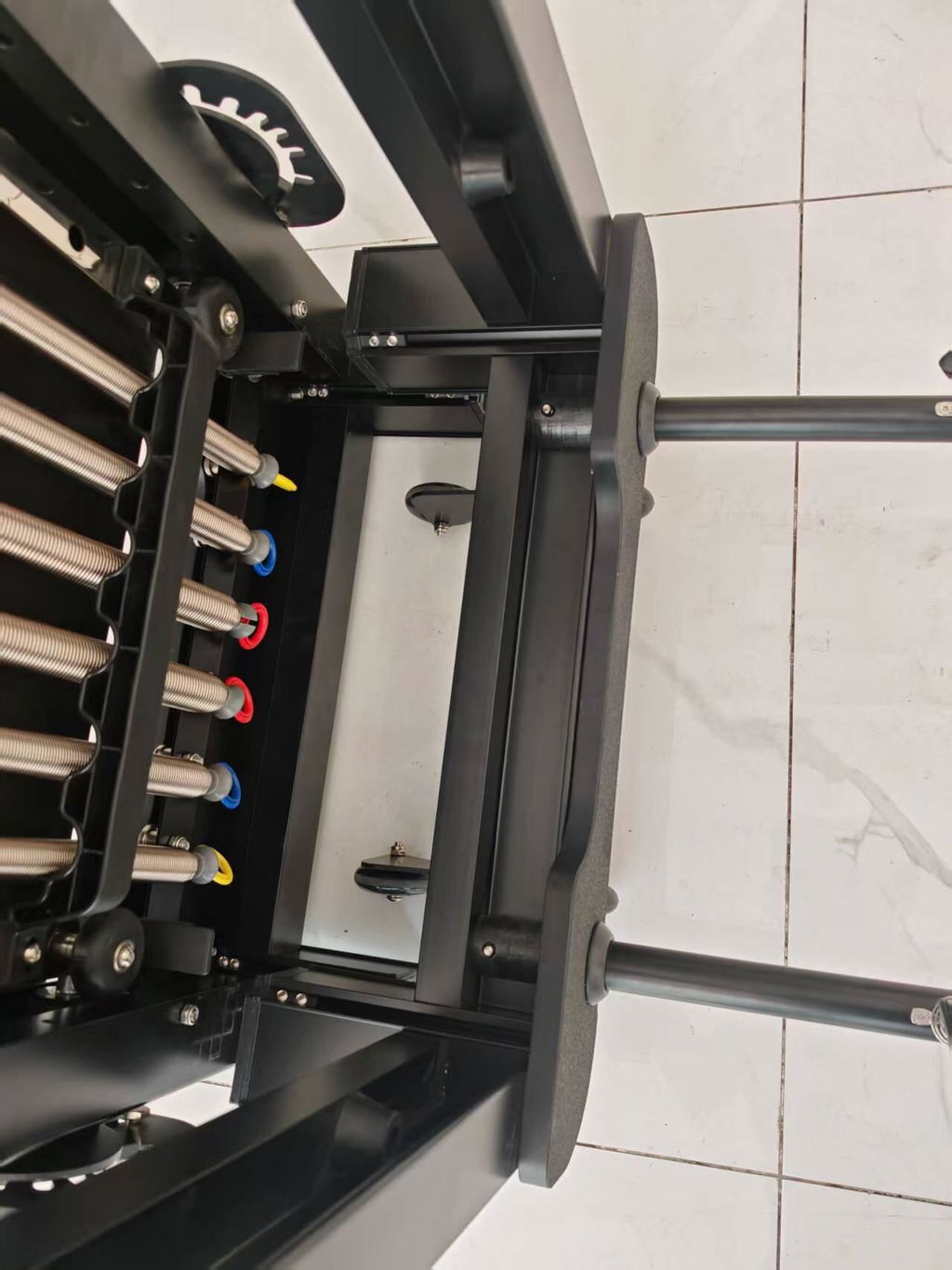
Springs create resistance. Better springs usually feel more consistent and controlled.
If the springs are too weak, too uneven, or lose tension quickly, the reformer may not support progressive training well. A good spring system should allow you to adjust resistance for different exercises, body types, and experience levels.
For home use, you do not need the most complex spring system on the market, but you do need one that feels safe, stable, and consistent.
4. Accessories Included
Some Pilates reformers look affordable at first, but essential accessories are sold separately. Common add-ons include:
- Jump board
- Sitting box
- Foot strap
- Shoulder rests
- Handles or straps
- Platform extender
- Tower or roll-down bar
Before comparing prices, check what is included in the base price. A reformer that costs $1,400 but requires several paid add-ons may not be cheaper than a $1,700 model that includes more accessories from the start.
5. Foldable vs. Non-Foldable Design
Foldable reformers can cost more than basic fixed-frame models because the folding system requires additional engineering. However, for many home buyers, the extra cost is worth it.
A foldable Pilates reformer is especially useful if you live in an apartment, use a shared room, or do not want a large machine permanently taking up floor space.
A non-foldable reformer may be better if you have a dedicated home gym and want the machine ready at all times.
Cheap vs. Good Quality Reformers: What Not to Sacrifice
It is tempting to search for the cheapest Pilates reformer possible, especially when prices range from around $1,000 to several thousand dollars. But there are a few areas where going too cheap can create problems.
Do not sacrifice:
- Frame stability
- Smooth carriage movement
- Spring quality
- Weight capacity
- Comfortable padding
- Clear setup instructions
- After-sales support
- Replacement parts availability
A reformer is something you will use while lying down, kneeling, standing, and moving under spring resistance. Stability matters. Comfort matters. Smooth movement matters.
A very low-cost machine can be fine for light use, but if you plan to use your reformer several times per week, it is usually better to choose a model with stronger construction and better long-term support.
Is a $1,500–$2,000 Pilates Reformer Good Enough for Home Use?
Yes. For many home users, the $1,500–$2,000 range is the sweet spot.
At this level, you can often get a reformer that feels much closer to studio equipment without entering the high price range of commercial machines. This budget is especially practical if you want to build a consistent home Pilates routine but do not need a full professional studio setup.
A reformer in this range is usually suitable for:
- Regular home workouts
- Beginners who want room to progress
- Intermediate users
- Small home gyms
- Apartment users
- People replacing expensive studio classes
- Users who want better stability than a very low-cost machine
You may not need to spend over $3,000 unless you want a tower, Cadillac-style setup, instructor-level versatility, or a more advanced training system.
When Should You Spend Over $2,000?
Spending more than $2,000 can make sense if you need more training options or a more complete studio-style setup.
You may want to spend over $2,000 if:
- You want a reformer with tower
- You want Cadillac-style exercises
- You are an instructor or advanced user
- You plan to train multiple people at home
- You want more vertical resistance options
- You have a dedicated training room
- You want one machine for more full-body programming
A standard reformer is enough for many users, but a tower or Cadillac-style system can expand your exercise options significantly. It allows more arm work, leg work, spinal mobility, assisted stretching, and advanced Pilates programming.
If you are serious about long-term practice, the extra cost can be worth it. If you are just starting out, a solid standard or foldable reformer may be the smarter first purchase.
To compare current models and listed prices, browse our Pilates reformers for home and studio use before deciding which configuration fits your budget.
BuyReformer Price Comparison Table
Here is a simple way to compare current BuyReformer models by budget and use case. Prices are based on BuyReformer product listings at the time of writing and may change during promotions.
| Model | Current Listed Price | Best For |
|---|---|---|
| BR Oak Foldable Pilates Reformer | $1,359 sale price | Small spaces, apartments, home users who need storage flexibility |
| BR Classic Pilates Reformer | $1,399 sale price | Budget-conscious buyers who want a stable full-size reformer |
| Aluminum Alloy Pilates Reformer | $1,499 sale price | Users who prefer a modern aluminum frame |
| BR Full Track Maple Pilates Reformer | $1,499 sale price | Users who prefer a longer, studio-style track |
| BR Maple Foldable Pilates Reformer | $1,499 sale price | Buyers who want foldable storage with a warmer wood look |
| Aluminum Pilates Reformer with Tower | $1,799 sale price | Users who want tower training under $2,000 |
| BR Maple Pilates Reformer | $1,999 sale price | Home users who want a premium wood reformer feel |
If your main goal is to find the best home Pilates reformer under $2,000, this price range gives you several practical choices, including foldable reformers, aluminum reformers, maple reformers, and even a tower option.
Which Price Range Should You Choose?
Choose under $1,500 if:
You are new to Pilates reformer training, want a practical home machine, and need to stay within a lower budget. This range can work well if you choose carefully and focus on stability, carriage movement, and basic included accessories.
Choose $1,500–$2,000 if:
You want the best balance of price and quality. This is the range most home buyers should consider first. It gives you better materials, smoother performance, and a more premium feel without reaching commercial studio prices.
Choose $2,000–$3,000 if:
You want a tower, more exercise options, or a more serious home Pilates setup. This range is ideal for people who already know they will use the machine often.
Choose $3,000+ if:
You want a premium system, Cadillac-style training, or a machine that can support more advanced programming. This range is usually best for experienced users, instructors, or buyers building a dedicated home studio.
Studio Classes vs. Owning a Pilates Reformer
Another way to think about reformer cost is to compare it with the price of studio classes.
If a reformer class costs $35–$60 and you take several classes per week, the yearly cost can become significant. Private sessions can cost even more.
Owning a reformer requires a larger upfront purchase, but it gives you:
- More flexible training time
- No class scheduling
- More privacy
- Unlimited practice at home
- Long-term value if used consistently
This does not mean everyone should stop taking studio classes. Many people benefit from working with an instructor, especially at the beginning. But if you already enjoy reformer Pilates and want to practice several times per week, a home reformer can become more cost-effective over time.
How to Avoid Overpaying for a Pilates Reformer
To avoid overpaying, do not choose based on price alone. Compare the structure behind the price.
Before buying, ask:
- Is the reformer foldable or fixed?
- What frame material is used?
- Does the carriage glide smoothly?
- What accessories are included?
- What is the weight capacity?
- Does it fit my room?
- Is it suitable for my training level?
- Is shipping included?
- What warranty or support is available?
- Are replacement parts available?
A higher price is not automatically better. A lower price is not automatically worse. The best reformer is the one that fits your space, budget, and real training needs.
Best Value Recommendation for Most Home Users
For most home users in 2026, the best value range is $1,500–$2,000.
This price range is strong enough for regular training, but still realistic for home buyers. It is especially suitable if you want a reformer that feels stable, looks good in your home, and supports long-term use.
If you live in an apartment or need to store your machine after workouts, choose a foldable reformer.
If you have a dedicated workout room, choose a full-track or non-foldable reformer.
If you want more exercise variety, choose a reformer with tower.
If you want the most complete system, consider a Cadillac-style or 3-in-1 machine.
FAQ: Pilates Reformer Cost in 2026
How much does a good Pilates reformer cost?
A good home Pilates reformer often costs between about $1,200 and $3,000. For many home users, the best value range is around $1,500–$2,000.
Is a Pilates reformer under $2,000 worth it?
Yes, a Pilates reformer under $2,000 can be worth it if it has a stable frame, smooth carriage, reliable springs, and useful included accessories. Many home users do not need a $4,000+ studio machine.
Why are Pilates reformers so expensive?
Pilates reformers are expensive because they use a frame, rails, moving carriage, springs, padding, straps, and adjustable components. Better materials, smoother movement, stronger springs, and included accessories all increase the price.
What is the cheapest Pilates reformer I should buy?
For regular home use, it is usually safer to avoid extremely cheap reformers that compromise stability or carriage quality. A practical starting budget is often around $1,200–$1,500.
Should I buy a foldable or non-foldable reformer?
Choose a foldable reformer if you have a small space, apartment, or shared room. Choose a non-foldable reformer if you have a dedicated home gym and want the machine ready to use all the time.
Is a reformer with tower worth the extra cost?
A reformer with tower is worth it if you want more exercise variety, vertical resistance, assisted stretching, and more advanced Pilates programming. If you only need basic reformer workouts, a standard reformer may be enough.
How long does a home Pilates reformer last?
A well-built home Pilates reformer can last for years with proper use and maintenance. Longevity depends on frame quality, spring condition, carriage system, usage frequency, and how well the machine is cared for.
Is buying a Pilates reformer cheaper than studio classes?
It can be cheaper over time if you practice consistently. Studio classes add up quickly when taken several times per week. A home reformer has a higher upfront cost, but it allows unlimited workouts at home.
Final Thoughts
The best Pilates reformer is not always the cheapest one, and it is not always the most expensive one.
In 2026, many home buyers should focus on the $1,500–$2,000 range first. This is where you can usually find the best balance of quality, stability, comfort, and long-term value.
If your space is limited, start with a foldable reformer. If you have a dedicated room, consider a full-track or wood reformer. If you want more training options, look at a reformer with tower or a multi-function system.
The right reformer should match your home, your body, your budget, and the way you actually plan to train.
Ready to compare options? Browse BuyReformer home Pilates reformers and choose the model that fits your space, budget, and training goals.
Share:
Why Most Beginner Pilates Reformer Advice Is Misleading
What Is a Cadillac Pilates Machine Used For