

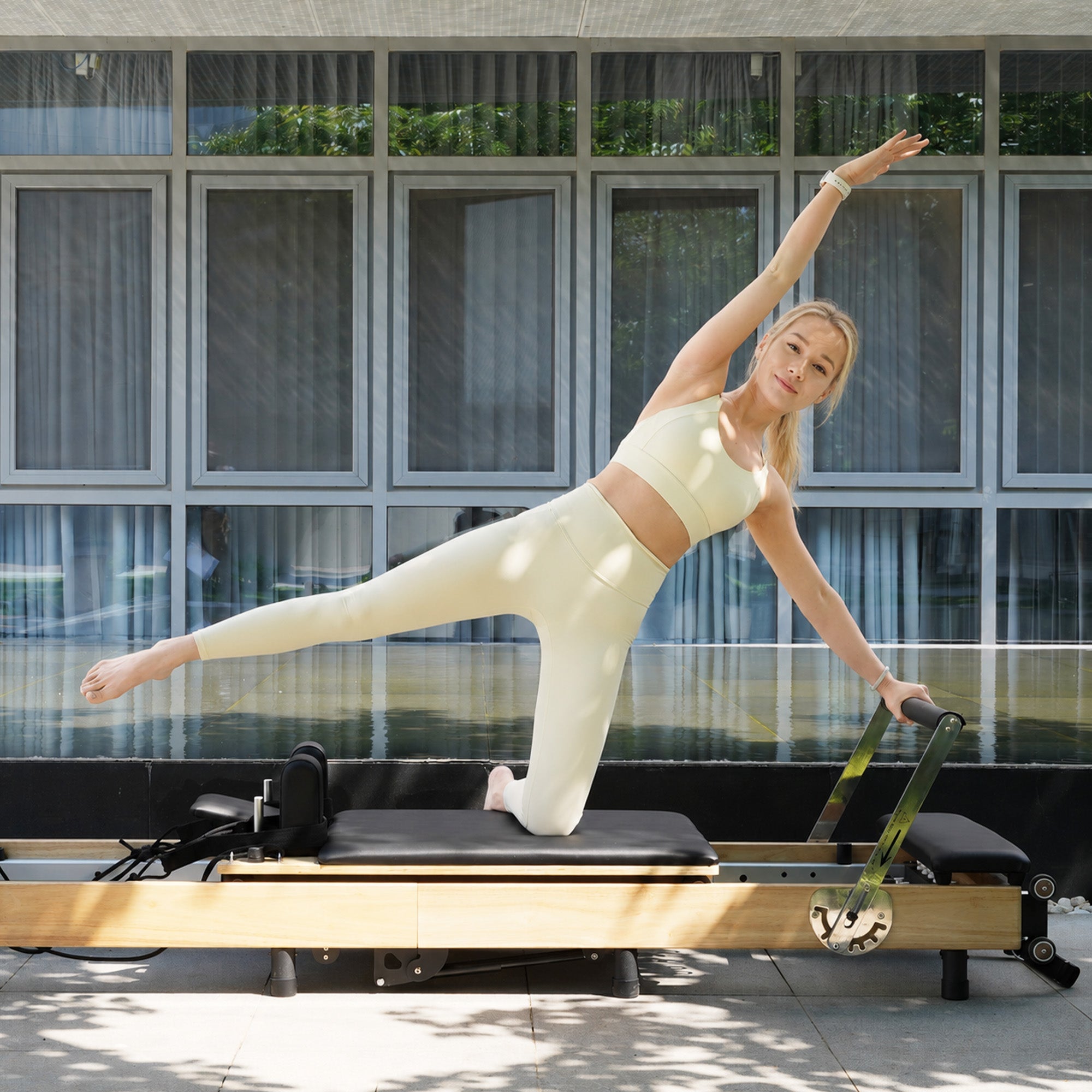
Pilates has become one of the most popular forms of home exercise, offering a combination of strength training, flexibility work, and low-impact movement. If you have recently purchased a Pilates reformer—or are thinking about getting one—you may be wondering how often you should use it to see results.
The good news is that Pilates is highly adaptable. Whether you are a beginner looking to build healthy habits or an experienced practitioner aiming to improve performance, the ideal training frequency depends on your goals, fitness level, and recovery needs.
In this guide, you'll learn how often to use a Pilates reformer at home, what results to expect, and how to create a sustainable Pilates routine.
Is It Safe to Use a Pilates Reformer Every Day?
For most healthy adults, using a Pilates reformer regularly is safe when exercises are performed with proper technique and appropriate intensity.
Unlike high-impact activities such as running or jumping sports, Pilates focuses on controlled movement patterns that place less stress on the joints. This makes it possible for many people to practice more frequently without excessive fatigue.
However, daily training does not always mean daily high-intensity workouts. Recovery remains an important part of any fitness program.
Many experienced practitioners alternate between:
Strength-focused sessions
Mobility and flexibility sessions
Core stability training
Recovery-focused movement days
This approach allows consistent practice while reducing the risk of overtraining.
How Often Should Beginners Use a Pilates Reformer?
If you are new to Pilates, starting slowly is often the best approach. If you are still deciding whether a home reformer is right for you, understanding the space requirements before purchasing can help you make a more informed decision.
A schedule of 2–3 sessions per week allows your body to adapt to new movement patterns while giving muscles time to recover.
During the first few weeks, focus on:
Learning proper technique
Building core awareness
Improving posture
Developing consistency
Many beginners find that shorter sessions performed consistently are more effective than occasional long workouts.
A simple beginner schedule might look like:
Monday: Pilates Reformer
Wednesday: Pilates Reformer
Saturday: Pilates Reformer
This provides enough training stimulus while allowing recovery between sessions.
How Often Should Intermediate Users Train?
Once you feel comfortable with reformer exercises and can maintain good technique, you can gradually increase your training frequency.
For many home users, 3–5 sessions per week provides an excellent balance between progress and recovery.
At this stage, Pilates can help improve:
Core strength
Flexibility
Balance
Muscular endurance
Body awareness
You may also begin incorporating more challenging resistance settings and exercise variations.
Can Advanced Users Practice Every Day?
Advanced practitioners often use their reformer nearly every day, but not every session has the same purpose.
A typical weekly routine may include:
Strength-focused workouts
Full-body conditioning
Flexibility sessions
Recovery-based movement
Technique refinement
By varying workout intensity, experienced users can maintain consistent practice without excessive strain.
Listening to your body remains essential. Persistent soreness, fatigue, or reduced performance may indicate the need for additional recovery time.
How Long Should Each Pilates Reformer Session Be?
The ideal session length depends on your schedule and goals.
General guidelines include:
20–30 Minutes
Suitable for:
Busy schedules
Beginners
Daily movement habits
30–45 Minutes
Suitable for:
General fitness
Strength development
Mobility improvement
45–60 Minutes
Suitable for:
Experienced practitioners
Comprehensive full-body workouts
Performance-focused training
Consistency often matters more than session length. A sustainable routine performed regularly usually delivers better results than occasional long workouts.
How Long Does It Take to See Results?
Results vary depending on training frequency, exercise quality, nutrition, and overall lifestyle.
Many people notice improvements in:
Within 2–4 Weeks
Better posture
Increased body awareness
Improved flexibility
Within 4–8 Weeks
Stronger core muscles
Better balance
Improved movement control
Within 8–12 Weeks
Greater overall strength
Enhanced endurance
Visible physical improvements
The key is maintaining a consistent routine over time.
Signs You May Need More Recovery
While Pilates is generally low-impact, recovery is still important.
Consider reducing training intensity if you experience:
Persistent muscle soreness
Joint discomfort
Unusual fatigue
Reduced motivation
Difficulty maintaining proper technique
Taking an extra recovery day can often improve long-term progress.
Building a Sustainable Home Pilates Routine
The best Pilates schedule is one you can realistically maintain.
When creating your routine:
Start with a manageable number of sessions.
Focus on consistency rather than perfection.
Gradually increase frequency as your fitness improves.
Include both challenging and recovery-focused sessions.
Choose equipment that fits your available space and lifestyle.
Many home users choose foldable models because they can be stored easily after workouts, making them particularly suitable for apartments and smaller homes.
Whether you use a foldable reformer in an apartment or a full-size reformer in a dedicated home studio, regular practice is the most important factor in achieving results. Choosing equipment that fits your available space and training goals can also make it easier to stay consistent over time.
Choosing the Right Pilates Reformer for Your Training Frequency
If you plan to train several times per week, choosing a reformer that matches your available space, fitness goals, and long-term routine is important.
Whether you are looking for a foldable model for everyday home workouts or a studio-quality reformer for advanced practice, selecting the right equipment can help you stay consistent and get more from every session.
Final Thoughts
So, how often should you use a Pilates reformer at home?
For most people:
Beginners: 2–3 times per week
Intermediate users: 3–5 times per week
Advanced practitioners: 5–7 times per week with varied intensity
The most effective Pilates routine is not necessarily the one with the highest frequency. It is the routine that you can perform consistently over the long term while maintaining proper technique and adequate recovery.
With the right approach, a Pilates reformer can become a valuable part of your long-term fitness and wellness journey.
FAQ
Is 20 minutes of Pilates reformer enough?
For beginners and busy individuals, a consistent 20-minute reformer workout can improve strength, flexibility, and body awareness over time.
Can you do Pilates reformer every day?
Yes, many people use a Pilates reformer daily. However, alternating workout intensity and allowing adequate recovery can help prevent overtraining.
How many times a week should beginners use a Pilates reformer?
Most beginners see good results with 2–3 reformer sessions per week while learning proper technique and building consistency.
Share:
How to Choose the Right Pilates Reformer for Your Home Gym
Mid-Year Reformer Sale: Save Up to $1000 on Selected Pilates Reformers