

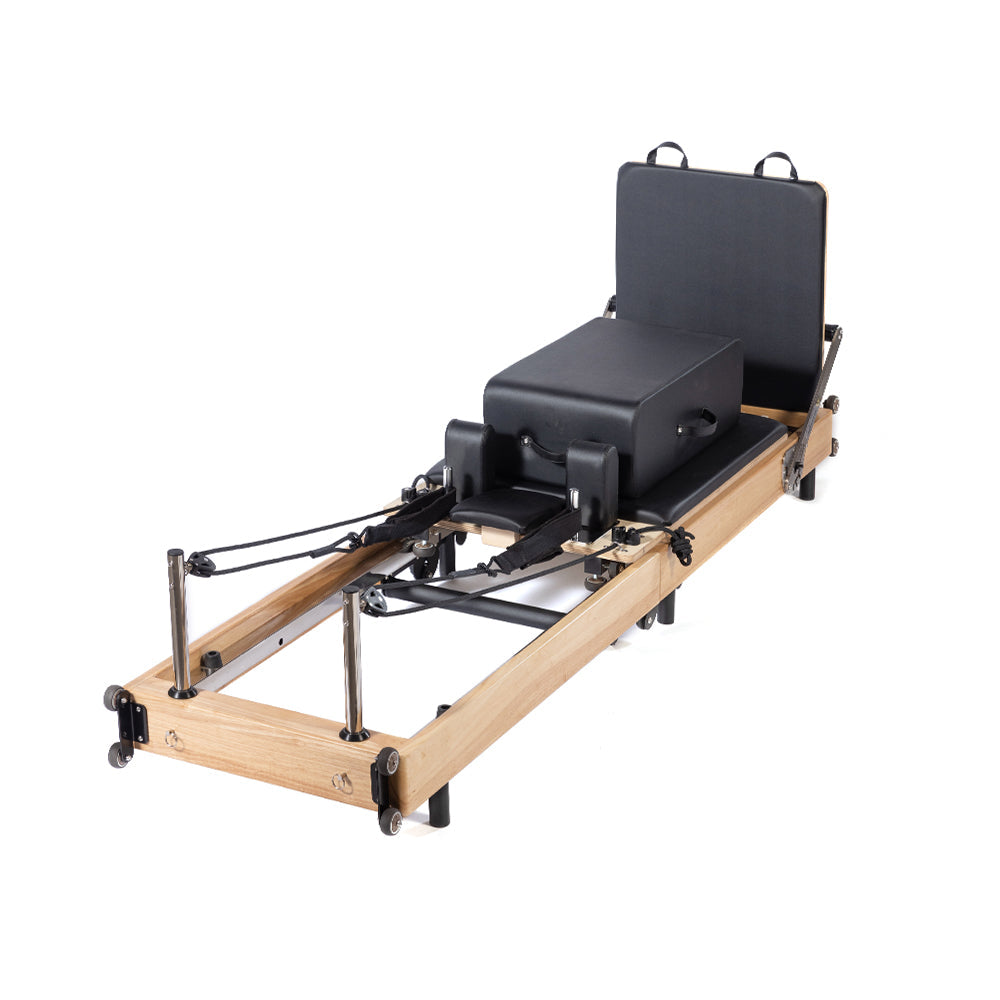
To choose a Pilates reformer for your home gym, start with your workout space, storage needs and body fit. Then compare adjustment options, the equipment your classes require, and the total cost of getting the reformer into your home.
If you need to reclaim your room after exercising, focus on folded dimensions and the actual storage process. If you have a dedicated workout area, prioritize comfortable positioning and convenient adjustments. If you plan to share your reformer, check whether you can set it up appropriately for each person.
This guide helps you work through those decisions using practical measurements and specific model comparisons.
Should You Choose a Foldable or Fixed-Frame Reformer?
Choose a foldable reformer when you need to store your equipment between workouts. Consider a fixed-frame reformer when you can leave it set up permanently. Your room layout and daily routine should guide this decision—not whether you consider yourself a beginner or an experienced practitioner.
If You Exercise in a Shared Room
A folding Pilates reformer can help you return a living room, bedroom or office to its other uses. Before choosing one, check what putting it away involves:
- Which accessories must you remove?
- Where do you need to stand while folding the frame?
- Can you follow the folding procedure comfortably, or will you need assistance?
- Does the route to storage include rugs, thresholds or tight turns?
- Where will you keep the sitting box, jumpboard and other accessories?
Foldable does not necessarily mean lightweight or portable. Folding a frame, rolling a machine and lifting it upstairs are different tasks.
Once you know that storage is essential, explore our foldable Pilates reformers and compare their dimensions and operating requirements.
If You Have a Dedicated Home Gym
You do not need a folding machine simply because you exercise at home. A fixed-frame reformer lets you keep your equipment in place without adding folding and unfolding to your routine.
However, a permanent setup does not automatically provide a better fit. You still need to compare carriage travel, footbar positions, rope adjustments and access around the equipment.
If You Share Your Reformer
Check the requirements of everyone who will use the machine.
If you and your partner have different heights or body proportions, find out how you will adjust the footbar, ropes and shoulder rests between sessions. Clear, accessible adjustments can matter more to your daily routine than extra accessories.
How Much Space Do You Need for a Home Pilates Reformer?
You need enough room for the reformer’s full operating footprint, plus clearance for your exercises, equipment adjustments and getting on and off. Folded dimensions describe storage space—not the space required during a workout.
Measure three areas separately: your exercise area, storage location and delivery route.
Measure Your Exercise Area
Use painter’s tape to mark the machine’s length and width on your floor. Then check the surrounding space:
- Can you get on and off from your intended side?
- Can you reach the footbar and springs for adjustments?
- Will your arms, legs or straps approach nearby furniture?
- Can you open nearby doors, cabinets and drawers?
- Will a sitting box, jumpboard or other accessory change your layout?
- If you want a tower, will the ceiling, lighting or a fan interfere?
Use the model’s instructions and your planned exercises to determine working clearance. A rectangle that holds the machine is only the starting point.
For a more detailed room-planning checklist, read how to choose a Pilates reformer for small spaces.
Check Folded Length, Width and Height
Compare all three dimensions before deciding where your reformer will go.
For example:
- The BR Maple Foldable Pilates Reformer measures 47.2 × 27.2 × 18.5 inches when folded—120 × 69 × 47 cm.
- The Foldable Aluminum Reformer measures 53.5 × 29.1 × 19.7 inches when folded—136 × 74 × 50 cm.
Both measurements follow length × width × height.
Suppose your storage location allows 130 cm along the intended length of the machine. The 120 cm model passes that first length check; the 136 cm model does not. You would still need to check width, height and room to maneuver the shorter model.
If you want under-bed storage, measure beneath the lowest crossbar—not just the open space at the edge of the bed. Confirm the permitted storage orientation and allow room to move the equipment.
Do not assume a reformer can stand upright because it folds.
Measure the Delivery Route Using Packaged Dimensions
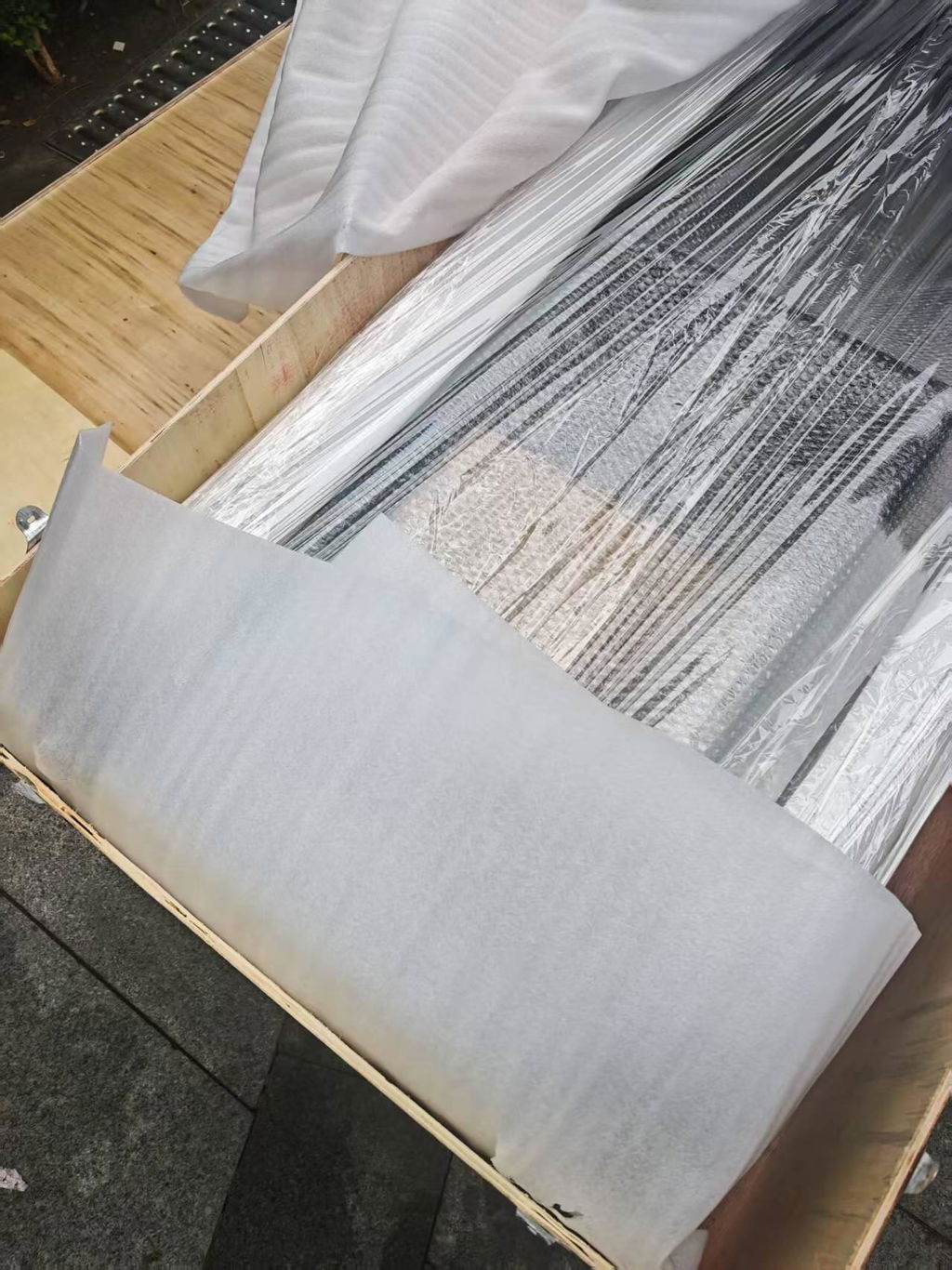
Your reformer arrives with packaging and protective materials, so its assembled dimensions are not enough for delivery planning.
Confirm the shipping package’s dimensions and weight, then check doorways, stairs, elevator openings and hallway turns. A reformer may fit your workout room but still require a carefully planned route into it.
How Do You Know Whether a Reformer Fits Your Body?
Check usable carriage travel, footbar reach, shoulder-rest positioning and carriage height. Overall machine length and maximum user weight cannot tell you everything about fit.
If You Are Tall or Have Longer Legs
Ask about usable carriage travel: the distance the moving platform can travel through its intended operating range.
Also check the relationship between the shoulder rests and footbar, including available adjustments. Two machines with similar overall lengths can provide different usable positions.
Do not rely on labels such as “extended” or “full-track” without checking the relevant measurements.
If You Are Shorter
Check whether you can reach the footbar comfortably and whether the ropes and shoulder rests can be set appropriately.
A larger machine is not automatically a better fit. Your priority is suitable positioning and adjustment range.
If Getting On and Off Is a Priority
Compare carriage height measured from the upholstered surface to the floor. Overall product height may include the footbar or other components.
For example, the BR Maple Foldable offers carriage heights of 29 cm and 35 cm, approximately 11.4 and 13.8 inches. These measurements are more useful for judging access than the machine’s overall height.
Always stay within the model’s maximum user-weight limit. A higher capacity does not, by itself, indicate a better body fit or more comfortable movement.
Which Features Matter Most for At-Home Pilates?
Focus on the features you will use during every session: adjustments, carriage movement, spring settings and setup procedures. Frame appearance matters, but it should not replace those checks.
Compare the Whole Machine, Not Just Wood Versus Aluminum
If you prefer natural wood grain, a wooden reformer may suit your room. If you prefer a metal finish, an aluminum model may appeal to you.
For moving and storage, however, compare actual weight.
The BR Maple Foldable and Foldable Aluminum both weigh 68 kg—approximately 150 lb. Choosing the aluminum model does not reduce the machine weight in this comparison. You can check the maple model and aluminum model for their individual specifications.
Look at wheel placement, folding steps and the route through your home before deciding which will be more practical to reposition.
Look Beyond “Smooth” and “Quiet”
When comparing carriage systems, look for a normal-speed demonstration of the exact model with the original sound preserved.
Watch for continuous movement and listen for noticeable impacts, scraping or other unusual sounds. A demonstration can help you understand operation, but it cannot guarantee the same sound levels in your room.
Avoid using frame material alone to predict noise or movement quality.
Understand Spring Settings Before Following a Class
More springs do not automatically mean a better workout.
Springs provide resistance, but they can also offer assistance during certain movements. Depending on the exercise, a lighter spring setting may require more control rather than making the exercise easier. Pilates Anytime’s spring guide explains this distinction and the differences between manufacturers.
If you follow online classes, learn how the instructor’s light, medium and heavy settings relate to your equipment. Spring colors are not standardized across brands.
Before buying, check the available resistance options, operating instructions and availability of compatible replacement springs.
If You Are a Beginner, Plan for Instruction
A beginner-friendly setup should give you a clear way to learn equipment adjustments and basic operation.
Check that you can access instructions for your model, and plan suitable beginner instruction alongside your purchase. An assembly video explains how to set up equipment; it does not replace guidance on how to exercise with it.
Do You Need a Reformer With Tower for Home Use?
You need a tower only if its equipment and exercise options match the training you plan to do. It is not a requirement simply because you intend to practice regularly.
A tower adds a vertical frame with additional spring attachment points and, depending on the model, bars and other components.
Use your planned classes to guide the decision:
- If your classes use the carriage, footbar and ropes, begin by comparing reformers that support those requirements.
- If your classes specifically use tower springs or bars, check the necessary configuration, installation requirements and clearance.
- If you want to add a tower later, confirm compatibility before buying. Do not assume every reformer accepts a retrofit.
An experienced practitioner may not need a tower, while a beginner following appropriate instruction may have a specific reason to choose one.
For more detail, explore whether a reformer with tower is worth it for home use.
Which BuyReformer Models Should You Compare?
Use the following specifications to narrow your shortlist around room size, equipment weight and budget.
| Model | Operating footprint: length × width | Machine weight | Reference price |
|---|---|---|---|
| BR Maple Foldable Pilates Reformer | 93.3 × 27.2 in / 237 × 69 cm | 68 kg / approximately 150 lb | $1,499 USD |
| Foldable Aluminum Reformer | 93.3 × 29.1 in / 237 × 74 cm | 68 kg / approximately 150 lb | $1,288 USD |
| BR Maple Pilates Reformer | 96.5 × 30.3 in / 245 × 77 cm | 78 kg / approximately 172 lb | $1,799 USD |
These footprints describe the equipment itself, excluding exercise clearance. Reference prices help with budgeting; confirm the price, configuration and availability of your chosen option before ordering.
If You Want Folding Storage and a Wooden Frame
Consider the BR Maple Foldable. Its hydraulic-assisted folding system and shorter folded length may be relevant to your setup.
Check the complete folding procedure and storage route before deciding whether it suits the way you will use it. Hydraulic assistance does not eliminate the need to follow handling instructions.
If You Prefer Aluminum and a Lower Equipment Price
Compare the Foldable Aluminum Reformer. It has the lowest reference price among these three models.
However, it weighs the same as the maple folding model and has larger folded dimensions. A lower price or aluminum frame does not automatically make it the better small-space choice.
If You Can Keep Your Reformer in Place
Include the BR Maple Pilates Reformer in your comparison. Plan around its larger footprint and 78 kg machine weight, including how you will get it into its final position.
Treat these as different practical options—not beginner, intermediate and advanced tiers. Eliminate models that do not meet your space, fit or handling requirements before deciding which additional features are worth paying for.
How Much Should You Budget for a Home Pilates Reformer?
For the three models above, reference equipment prices range from $1,288 to $1,799 USD. Your complete setup budget depends on the selected configuration, included accessories and delivery arrangements.
Compare Equivalent Packages
Before comparing prices, check whether each package includes the sitting box, jumpboard and other accessories you expect to use.
A useful budget includes:
- Your selected reformer.
- Required accessories not already included.
- Any applicable tax or delivery charges.
- Any moving or assembly services you arrange separately.
Confirm which charges apply to your address and order rather than assuming every advertised package includes the same services.
Plan for Curbside Delivery
For large or heavy equipment shipped within the United States, our freight delivery is curbside. You are responsible for unloading and moving the equipment inside. Delivery to your address does not mean placement in your workout room. Review our shipping policy before arranging delivery.
If you live upstairs or in an apartment building, confirm elevator access, building requirements and who will help with the move.
Also check availability and the estimated delivery window for your chosen model and configuration before booking movers or scheduling your first session.
Check Setup, Warranty and Replacement-Part Support
Visit our installation and setup guide to find instructions for your model. If the available demonstration does not match your equipment, contact us before applying another model’s procedure.
Before ordering, clarify:
- Which warranty terms apply to the frame and individual components.
- How normal wear is treated.
- How to obtain compatible springs, ropes or wheels when replacement is needed.
- What assistance is available if you encounter an assembly issue.
Read the return policy as well. Customer-initiated returns, including returns because equipment does not fit the intended space, involve actual return transportation costs. For oversized equipment, those costs can be substantial.
What Should You Check Before Ordering?
Before you buy your home Pilates reformer, make sure you can answer yes to each of these questions:
- Have you measured the workout area and allowed for your intended exercises?
- If you need storage, have you checked folded dimensions, permitted orientation and handling instructions?
- Have you confirmed packaged dimensions and the route into your home?
- Have you checked body fit, adjustment options and the maximum user-weight limit?
- Does the equipment match the classes you plan to follow?
- Do you know which accessories are included?
- Have you confirmed price, availability, delivery arrangements and after-sales terms?
The right reformer should work for both your training and your home. A machine that fits your room but is difficult to store—or fits your budget but not your body—still leaves an important problem unresolved.
When you are ready, compare our Pilates reformers. If you are deciding between models, email service@buyreformer.com with your workout-area measurements, storage dimensions, user heights and shortlisted equipment so we can help you check the details.
Share:
What Is a Cadillac Pilates Machine Used For
How Often Should You Use a Pilates Reformer at Home?