

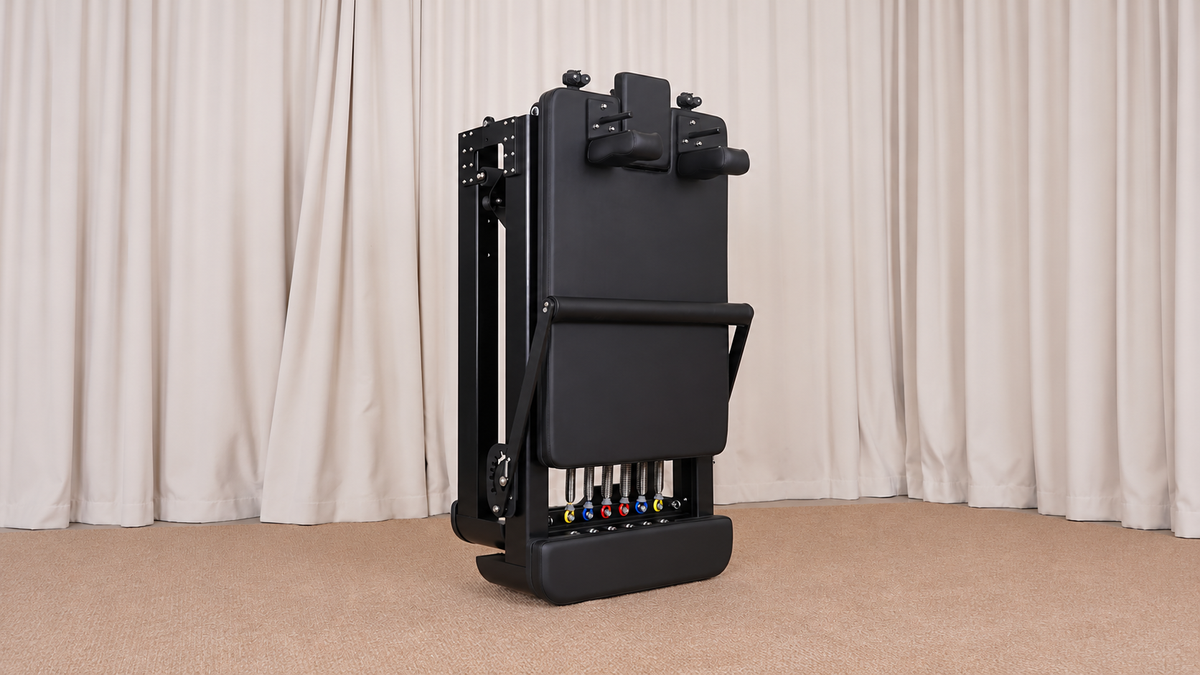
Not sure which Pilates reformer springs to use? The right spring resistance depends on your exercise, the muscles you want to target, your experience level, and how much support you need.
In general, heavier springs provide more resistance for strength-focused movements such as leg presses. Lighter springs can be useful for arm work, mobility, and precise control. However, lighter resistance doesn't always mean an easier workout. In certain balance and core exercises, lighter springs make the moving carriage harder to stabilize.
In this guide, you'll learn how Pilates reformer spring colors work, which resistance levels are commonly used for different muscle groups, and how to choose a setup that supports your workout goals.
Contents
01/ Understanding Pilates Reformer Spring Resistance
02/ Pilates Reformer Spring Colors Explained
03/ Quick Guide: Which Springs Should You Use?
04/ Best Spring Resistance for Legs and Glutes
05/ How to Choose Springs for Core Exercises
06/ Spring Resistance for Arms, Shoulders, and Back
07/ Springs for Flexibility, Balance, and Mobility
08/ How Many Springs Should Beginners Use?
09/ How to Tell if Your Spring Resistance Is Right
10/ Explore the BR Stealth Foldable Aluminum Reformer
11/ Frequently Asked Questions
1. Understanding Pilates Reformer Spring Resistance
Your Pilates reformer uses springs to create resistance as the carriage moves along its rails. By connecting or disconnecting springs, you can change how much force is required to move the carriage.
But spring resistance is different from simply lifting a fixed weight.
The resistance you experience can change throughout an exercise as the springs stretch. Your body position, the direction of movement, and the exercise itself also influence how challenging the workout feels.
For example:
-
During footwork, adding resistance can increase the effort required to push the carriage away.
-
During seated arm exercises, lighter resistance may help you maintain better shoulder alignment and controlled movement.
-
During certain plank variations, heavier springs may provide additional carriage stability, while lighter springs can increase the demand on your core.
This is why choosing the right spring is about more than selecting the heaviest option available.
Does a heavier spring always mean a harder workout?
No. Heavier springs increase resistance, but they can also provide support and stability in certain exercises.
For strength-focused movements, additional spring resistance often makes the movement more demanding.
For stability-focused exercises, the opposite can happen. Reducing spring tension may make the carriage less supported, requiring greater balance and muscular control.
Your goal should be to choose a resistance level that allows you to move smoothly, maintain alignment, and control the carriage throughout the entire exercise.
2. Pilates Reformer Spring Colors Explained
Many Pilates reformers use color-coded springs to help you identify different resistance levels.
However, spring colors are not standardized across Pilates equipment brands. A red spring on one reformer may provide a completely different level of resistance from a red spring on another.
Always check the specifications of your own equipment before following a spring recommendation from another instructor or brand.
BR Stealth Reformer Spring Resistance
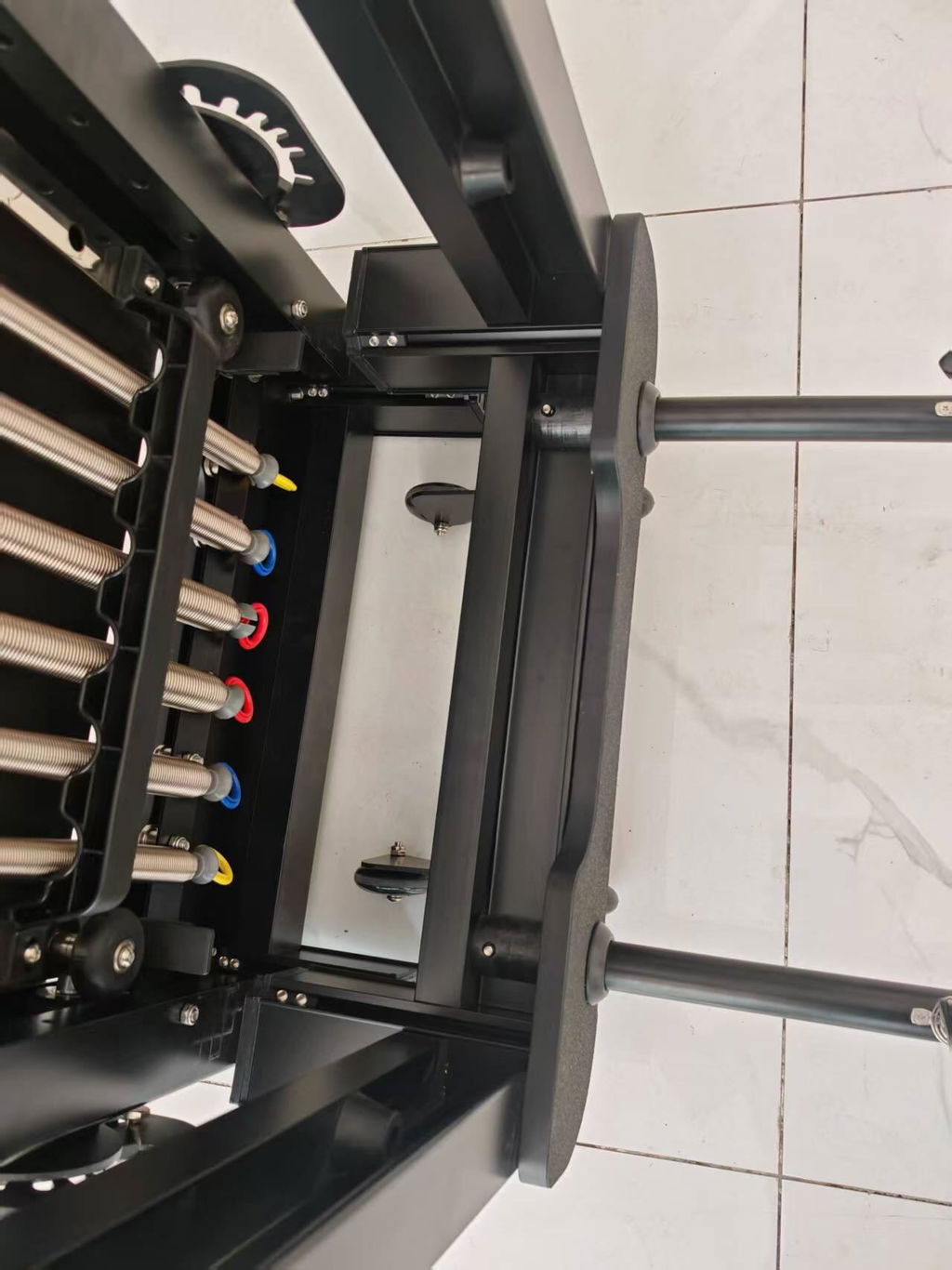
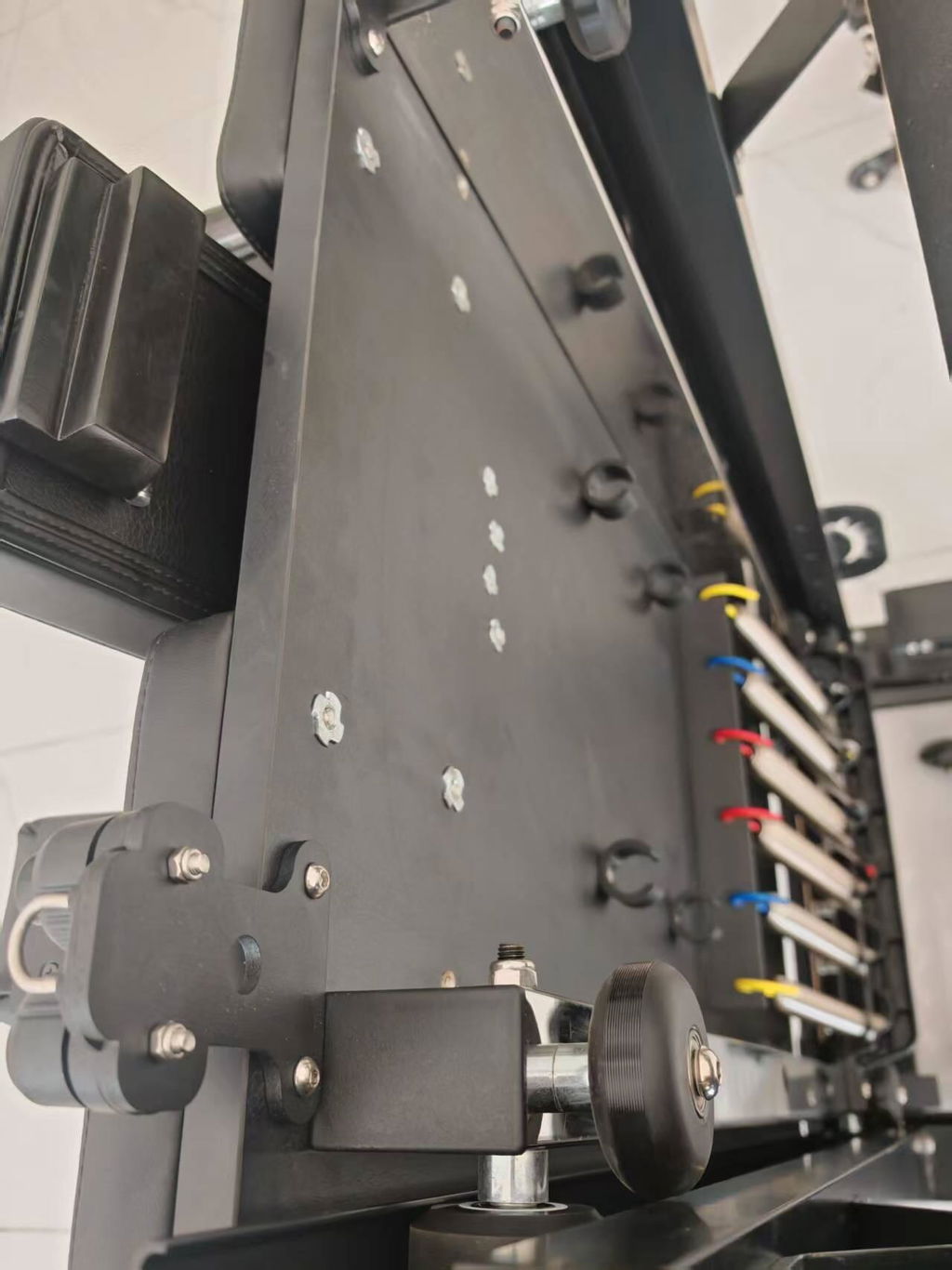
The BR Stealth Foldable Aluminum Reformer includes six springs across three resistance levels.
| Spring Color | Listed Resistance | Quantity | General Training Focus |
|---|---|---|---|
| Yellow | 19 lbs | 2 | Light resistance, mobility, and controlled movement |
| Blue | 32 lbs | 2 | Moderate resistance, balance, coordination, and general conditioning |
| Red | 61 lbs | 2 | Heavy resistance and strength-focused training |
These are the manufacturer's listed resistance values. The exact extension length and testing conditions for these ratings are not available, so they should not be interpreted as the constant force you experience throughout an exercise.
The three resistance levels give you flexibility to explore different training goals without relying on one fixed spring setting.
Important: Your spring color system may differ from reformers used in online tutorials. Match the resistance level and exercise purpose, not just the color name.
3. Quick Guide: Which Springs Should You Use?
If you're wondering which Pilates reformer springs to use for specific muscles, start with the general guidance below.
| Exercise | Main Muscle Groups | General Resistance Direction | Training Focus |
|---|---|---|---|
| Footwork | Quadriceps, glutes, calves | Moderate to heavy | Leg strength and alignment |
| Single-Leg Footwork | Quadriceps, glutes, hip stabilizers | Controlled, exercise-appropriate resistance | Unilateral strength and pelvic stability |
| Feet in Straps / Frog | Glutes, inner thighs, hamstrings | Light to moderate | Hip control and leg coordination |
| The Hundred | Abdominals, shoulder stabilizers | Light to moderate | Core endurance and breathing |
| Knee Stretches | Abdominals, hip muscles, legs | Varies with exercise goal | Core stability and coordinated movement |
| Seated Arm Work | Arms, shoulders, upper back | Light to moderate | Upper-body control and strength |
| Rowing | Upper back, shoulders, arms, core | Light to moderate | Postural control and coordination |
| Bridge / Hip Lift | Glutes, hamstrings, core | Stable, exercise-appropriate resistance | Hip extension and pelvic control |
| Elephant | Hips, abdominals, shoulders | Supportive resistance initially | Mobility and stability |
These are general training directions, not fixed spring prescriptions. The exact number of springs depends on your reformer, exercise variation, body weight, strength, and ability to control the carriage.
Let's look at how these choices relate to the different parts of your body.
4. Best Spring Resistance for Legs and Glutes
Your legs and glutes contain large muscle groups that can work against substantial resistance. However, not every lower-body Pilates exercise requires heavy springs.
Footwork: Quadriceps, Glutes, and Calves
Recommended resistance direction: Moderate to heavy
Footwork is one of the foundational exercises performed on a Pilates reformer.
You lie on the carriage, place your feet against the footbar, and press the carriage away by extending your legs.
This movement helps you train:
-
Quadriceps, which straighten your knees
-
Glutes, which contribute to hip extension and stabilization
-
Calves, which help control ankle and foot movement
-
Lower-body alignment and coordination
A moderate-to-heavy spring setup can provide meaningful resistance for both legs.
If your carriage moves too easily and you can maintain proper form, additional resistance may make the exercise more strength-focused.
However, if your hips shift, knees lose alignment, or you cannot return the carriage smoothly, the resistance may be inappropriate for your current ability.
What should you focus on?
Keep your pelvis stable, track your knees in line with your feet, and control the carriage in both directions. Avoid snapping your knees straight or allowing the springs to pull the carriage back suddenly.
Single-Leg Footwork: Balance and Unilateral Leg Strength
Recommended resistance direction: Controlled resistance appropriate for one leg
Single-leg footwork changes the challenge because one leg performs the movement while your pelvis and trunk work to resist unwanted rotation.
You may feel more demand in your hip stabilizers even when the overall spring resistance is lower than during two-legged footwork.
Choose a setup that lets you maintain an even pelvis and smooth carriage movement.
Feet in Straps / Frog: Glutes, Hamstrings, and Inner Thighs
Recommended resistance direction: Light to moderate
Feet in Straps exercises involve moving your legs while your feet are supported by straps connected to the reformer's pulley system.
In the Frog exercise, you bend and extend your knees while controlling the position of your hips.
These movements can help you work on:
-
Hip stability and coordination
-
Adductor, or inner-thigh, engagement
-
Glute and hamstring control
-
Pelvic stability during leg movement
A lighter or moderate spring setup may allow you to explore the movement without using excessive effort or compromising pelvic alignment.
What should you focus on?
Keep your pelvis stable, avoid forcing your legs into a larger range of motion, and maintain consistent tension through the straps.
If the springs pull you into an uncomfortable position or cause your lower back to arch excessively, adjust the setup with a qualified instructor.
Bridge / Hip Lift: Glute Strength and Pelvic Control
Recommended resistance direction: Enough support to maintain a stable carriage
A reformer bridge challenges your glutes and hamstrings while requiring your trunk and pelvis to remain controlled.
The amount of spring resistance you need depends on the bridge variation and whether the carriage is intended to stay still or move.
More resistance is not automatically better. Choose a setup that supports the intended movement and keeps the carriage predictable.
5. How to Choose Springs for Core Exercises
You don't always need heavy springs to challenge your abdominal muscles.
In Pilates, core training often requires you to stabilize your body while your arms, legs, or the carriage move.
The Hundred: Abdominal Endurance
Recommended resistance direction: Light to moderate, depending on the variation
The Hundred is a classic Pilates exercise that combines breathing, abdominal engagement, and rhythmic arm movement.
When performed on a reformer, the straps can add resistance to your arms while your core works to maintain your position.
Your main focus includes:
-
Abdominal endurance
-
Trunk stabilization
-
Breathing coordination
-
Shoulder and arm control
Choose a resistance that allows you to maintain controlled breathing and a stable trunk without pulling your shoulders out of position.
If the resistance causes neck strain, excessive back arching, or loss of control, the exercise or setup may need to be modified.
Knee Stretches: Core Stability and Hip Coordination
Recommended resistance direction: Varies with the training goal
Knee Stretches are performed while kneeling on the carriage with your hands supported by the footbar.
Rather than simply pushing with your legs, you coordinate carriage movement while maintaining trunk stability.
Lighter resistance can increase the challenge of controlling the moving carriage. Greater resistance may shift more of the work toward the muscles moving the legs.
The key is understanding what you're trying to train.
If your goal is precise core control, adding more springs may not automatically improve the exercise.
Long Stretch: Full-Body Core Control
Recommended resistance direction: Prioritize adequate carriage support
The Long Stretch resembles a plank performed on a moving reformer carriage.
Your abdominals, shoulders, arms, and legs work together to maintain alignment.
Reducing spring resistance may increase the stabilization challenge, but it can also make the exercise less predictable.
Because this exercise involves supporting your body weight on a moving surface, learn it with qualified instruction before experimenting with lighter settings.
6. Spring Resistance for Arms, Shoulders, and Back
If your goal is to strengthen your arms or improve upper-body control, you generally don't need to begin with the heaviest springs.
The right resistance should allow you to move your arms without losing the position of your ribs, pelvis, or shoulders.
Seated Arm Work: Arms and Shoulder Stability
Recommended resistance direction: Light to moderate
Seated arm exercises can include biceps curls, chest expansion, and other strap-based movements.
Depending on the exercise, you can target:
-
Biceps and triceps
-
Shoulder muscles
-
Upper-back stabilizers
-
Postural control muscles
Start with a resistance that allows you to sit upright and move smoothly.
As your strength and coordination improve, you can explore greater resistance while maintaining the same quality of movement.
Rowing: Upper-Back Strength and Posture
Recommended resistance direction: Light to moderate, based on the variation
Reformer Rowing involves coordinated movements of your arms and trunk while seated on the carriage.
Different variations may emphasize your upper back, shoulders, abdominals, and spinal mobility.
If the springs are too heavy, you may compensate by shrugging your shoulders or leaning excessively.
If the springs are too light, the exercise may require a different type of trunk control rather than simply feeling easier.
Focus on maintaining your posture and moving through your intended range with control.
7. Springs for Flexibility, Balance, and Mobility
Not every Pilates exercise is intended to build maximum muscular strength.
Some movements focus on joint mobility, coordination, and your ability to control your body position.
Elephant: Hip Mobility and Full-Body Stability
Recommended resistance direction: Adequate support before progressing
Elephant is a standing reformer exercise in which you place your hands on the footbar and your feet on the carriage.
The movement emphasizes hip mobility while requiring your shoulders and trunk to remain stable.
A supportive spring setup may help make the moving carriage more manageable.
Reducing resistance may increase the stabilization challenge, but this should not be treated as an automatic progression for beginners.
Because you're standing on the moving carriage, only perform this exercise when you can do so safely under appropriate instruction.
Mobility-Focused Strap Exercises
For controlled leg movements, a lighter spring can sometimes make it easier to explore your available range of motion.
However, spring resistance still affects the force acting on your joints and limbs.
Choose a setup that allows controlled movement without pulling you beyond a comfortable range.
Remember: flexibility training should never require forcing a joint into position.
8. How Many Springs Should Beginners Use?
There is no universal number of reformer springs that every beginner should use.
A single spring can feel challenging in one exercise, while several springs may provide useful support in another.
If you're new to reformer Pilates, focus on these principles:
-
Learn the exercise first. Understand the starting position, movement path, and where your body should remain stable.
-
Use an appropriate level of support. A lighter spring is not always safer or easier.
-
Prioritize controlled movement. You should be able to move the carriage smoothly without sudden acceleration.
-
Adjust one variable at a time. Changing spring resistance, body position, and exercise difficulty simultaneously can make it difficult to understand what is affecting your workout.
-
Follow your equipment instructions. Use a qualified Pilates instructor to help determine suitable settings for unfamiliar exercises.
Your experience level matters, but it should never be the only factor determining spring resistance.
9. How to Tell if Your Spring Resistance Is Right
Instead of asking whether you're using enough springs, ask whether the setup supports the exercise you're trying to perform.
Signs Your Resistance May Be Appropriate
-
You can maintain proper body alignment.
-
You can control the carriage in both directions.
-
You can breathe without excessive bracing.
-
You feel the intended muscles working.
-
You can complete the movement without jerking or relying on momentum.
Signs You May Need to Reassess Your Setup
-
The carriage moves faster than you can control.
-
Your shoulders, pelvis, or spine repeatedly lose alignment.
-
You cannot complete the intended range of motion comfortably.
-
You need to grip excessively or hold your breath.
-
You experience pain, dizziness, or unusual discomfort.
If you're experiencing these problems, don't assume that adding or removing springs is the only solution. Your technique, starting position, exercise variation, or overall training level may need to change.
Always stop if you experience pain or dizziness.
How to Change Springs Safely
Before changing spring resistance, stop the exercise and make sure the carriage is stable.
Never change springs while they are under exercise load.
Use the attachment points and adjustment method specified for your reformer, and confirm that every selected spring is securely connected before resuming movement.
10. Explore the BR Stealth Foldable Aluminum Reformer
Now that you understand how Pilates reformer spring resistance works, you can see why having several resistance options is useful for a home workout.
The BR Stealth Foldable Aluminum Reformer is designed to give you different ways to adjust your training setup.
Three Spring Resistance Levels
With two yellow, two blue, and two red springs, you have access to light, medium, and heavy resistance categories.
This allows you to explore different exercise goals, from controlled arm movements to strength-focused lower-body work.
You can also use compatible spring combinations to vary the total resistance, provided the setup is appropriate for your exercise and equipment.
Because the listed spring ratings are not accompanied by a full force-versus-extension chart, you should not interpret a combination's added nominal ratings as the exact load you experience throughout the carriage movement.
Adjustable Footbar
The BR Stealth features an eight-position adjustable footbar.
This gives you different setup options for exercises involving the feet or hands, depending on the movement and your instructor's guidance.
Foldable Aluminum Frame
If you want to practice Pilates at home without keeping a reformer fully extended at all times, the foldable design may be particularly useful.
Its aluminum-alloy frame combines an adjustable training setup with the convenience of a foldable structure.
Additional Training Accessories
The listed accessories include a sitting box and jump board, providing options for different exercises when used with appropriate instruction.
Looking for a reformer with multiple spring resistance levels?
Explore the BR Stealth Foldable Aluminum Reformer to learn more about its design, included accessories, and specifications.
11. Frequently Asked Questions
What color spring should I use for leg workouts?
For strength-focused exercises such as Footwork, moderate-to-heavy resistance is commonly used. On the BR Stealth, red is the heavy-resistance category, but the exact number of springs should be determined by the exercise, your ability, and the equipment setup.
What Pilates reformer springs are best for glutes?
There isn't one spring color that is best for every glute exercise. Footwork and some strength-focused movements may use heavier resistance, while hip-control exercises can use lighter settings. Choose resistance based on the movement rather than the muscle group alone.
What springs should I use for abs?
Core exercises often use light-to-moderate resistance, but the correct setting depends on the movement. In exercises that challenge carriage stability, lighter springs can sometimes make the abdominal work more demanding.
How many springs should I use for Footwork?
Footwork generally uses more supportive resistance than many arm exercises, but there isn't a universal spring count. The appropriate setup varies between reformer brands, spring specifications, training methods, and individual users.
Are lighter Pilates springs easier?
Not always. Lighter springs reduce resistance in some strength movements, but they may also provide less support in balance and stability exercises. This can make certain movements more challenging.
Are Pilates reformer spring colors universal?
No. Pilates reformer manufacturers use different color-coding systems. Always check the spring specifications of your own equipment before copying a setup from another brand.
What is the difference between yellow, blue, and red springs on the BR Stealth?
For the BR Stealth, yellow springs are listed at 19 lbs, blue springs at 32 lbs, and red springs at 61 lbs. The equipment has two of each color. These values identify the manufacturer's listed resistance categories rather than constant exercise loads.
Can you combine different spring colors?
Many reformers allow compatible springs of different resistance levels to be engaged together. Use only the combinations and attachment methods appropriate for your specific equipment. The actual resistance changes with spring extension and movement.
Should beginners always use yellow springs?
No. Beginners do not always need the lightest springs. Some exercises require more spring support to keep the carriage stable. The safest choice depends on the exercise and your ability to control it.
Can Pilates reformer workouts build muscle?
Reformer exercises can provide resistance that challenges your muscles, including your legs, glutes, arms, and core. The strength-training effect depends on the exercise, resistance, technique, effort, and how your training progresses over time.
Final Thoughts: Choose Control Before Resistance
The best Pilates reformer spring setup is not necessarily the lightest or heaviest one.
It's the setup that helps you perform the intended movement with control, appropriate resistance, and proper alignment.
When you understand how spring resistance affects different exercises, you can make more informed choices about your workouts and get more value from your reformer.
Whether you're focusing on leg strength, core stability, upper-body control, or mobility, remember to match the resistance to the movement—not just the color.
Explore the BR Stealth Foldable Aluminum Reformer to discover its three spring resistance levels and adjustable features.
Safety note: This guide provides general educational information, not individualized exercise prescriptions. Specific spring combinations for the BR Stealth have not been independently validated for every exercise described. Follow your equipment instructions and seek guidance from a qualified Pilates instructor, especially for unfamiliar, standing, or advanced movements.
Share:
Pilates Reformer Accessories: What Do You Actually Need for Home Use?
Pilates Combo Chair Assembly Instructions and User Manual